
Countertop Oven And Air Fryer: Best Buying Guide
A countertop oven and air fryer combine baking, roasting, toasting, and crisp cooking in one handy appliance.
A countertop oven and air fryer can make daily cooking faster, easier, and more flexible than a full-size oven. After comparing cooking modes, basket designs, heat flow, cleanup, and real kitchen use, I’ll show you what these appliances do well, where they fall short, and how to choose the right model for your home.

What Is a Countertop Oven and Air Fryer?
A countertop oven and air fryer is a compact appliance that uses heating elements and a fan to cook food. It works like a small oven, but its fan moves hot air around the food. This process helps create a browned, crisp surface with little oil.
Most models include several cooking modes:
• Air fry for crisp foods such as wings, fries, and vegetables
• Bake for cookies, cakes, casseroles, and bread
• Broil for melting cheese or browning the top of a dish
• Toast for bread, bagels, and English muffins
• Roast for chicken, fish, meat, and root vegetables
• Reheat for leftovers that may become soggy in a microwave
The main difference from a basket air fryer is the shape and cooking space. A basket air fryer is built for fast, small batches. A countertop oven and air fryer usually has racks, trays, and a larger interior.
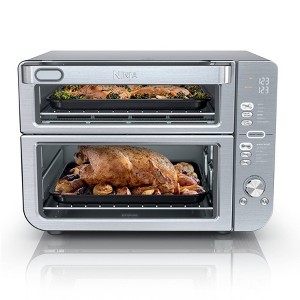
This design gives you more room to cook. You may fit a 12-inch pizza, a small chicken, or two trays of vegetables, depending on the model.
How Does a Countertop Oven and Air Fryer Work?
A countertop oven and air fryer uses a heating system at the top, bottom, or both. A fan circulates hot air around the food. This moving air removes moisture from the surface and helps food brown.
The result is similar to deep frying in texture, but it does not require a large pot of oil. You still need some oil for many recipes, but a light spray or brush is often enough.
The cooking process has four simple parts:
-
The heating elements warm the cooking chamber.
-
The fan moves hot air around the food.
-
Moisture leaves the outer surface.
-
The food develops a crisp, golden texture.
A countertop oven and air fryer often cooks faster than a full-size oven because its chamber is smaller. However, cooking time still depends on food size, moisture, thickness, and how full the tray is.
Do not assume every model cooks at the same speed. Fan strength, tray position, insulation, and temperature accuracy can vary. A food thermometer remains the safest way to check meat and poultry.
Countertop Oven and Air Fryer Benefits
The biggest benefit is versatility. One appliance can replace or reduce the need for a toaster, small oven, air fryer, and sometimes a microwave for reheating.
Faster cooking
The small chamber heats quickly. It also keeps hot air close to the food. This can reduce cooking time for items such as frozen fries, chicken tenders, salmon, and roasted vegetables.
Better texture for leftovers
A microwave heats food quickly, but it can make breaded food soft. A countertop oven and air fryer can restore crispness to pizza, fries, roasted potatoes, and fried chicken.
Less oil
Air frying can reduce the need for deep oil. A small amount of oil helps with browning and prevents some foods from drying out.
The exact amount of fat depends on the recipe. Air-fried food is not automatically low calorie if it contains cheese, heavy breading, or a large amount of oil.
More cooking space
The oven shape works well for flat foods. You can cook toast, pizza, fish fillets, or a sheet of vegetables without stacking them in a deep basket.
Useful during hot weather
A countertop oven and air fryer can produce less room heat than a full-size oven. This can make it useful in summer or in homes with small kitchens.
Easier meal planning
You can cook a quick protein, vegetable, and side dish with less equipment. Many families use the appliance for breakfast in the morning and dinner later the same day.
Countertop Oven and Air Fryer Limitations
No appliance does everything perfectly. Understanding the limits will help you avoid wasted food and disappointment.
It needs counter space
These ovens are larger than basket air fryers. Measure the area before buying. Leave space around the appliance so heat can escape, and follow the manufacturer’s clearance instructions.
It may cook unevenly
Food near the heating element can brown faster. Some models need a tray rotation halfway through cooking. Smaller foods can also block air if you spread them too closely.
It can be noisy
The fan creates a steady sound. This is normal, but the noise level differs from one model to another.
Cleanup can take time
Grease may collect on the tray, walls, and heating elements. A removable crumb tray makes cleaning easier. Grease buildup can create smoke and unpleasant odors.
It may not replace a full oven
A countertop oven and air fryer cannot usually handle large casseroles, multiple full-size baking sheets, or a large turkey. It is best viewed as a partner to your main oven, not always a complete replacement.
Some foods do not air fry well
Wet batter can drip through a rack or fail to set. Very light foods may move around from the fan. Cheese without a stable base can melt onto the tray.
Countertop Oven and Air Fryer Compared With Other Appliances
Choosing between appliances depends on your cooking habits, kitchen space, and family size.
Countertop oven and air fryer versus basket air fryer
A basket air fryer is often faster for small portions. It usually has a compact cooking chamber and a strong air stream.
A countertop oven and air fryer offers more room and more cooking modes. It may be better for pizza, toast, baking, and family meals.
Choose a basket air fryer if you mainly cook:
• Chicken wings
• Frozen snacks
• Small servings of vegetables
• One or two portions at a time
Choose a countertop oven and air fryer if you often cook:
• Toast and bagels
• Pizza
• Casseroles
• Fish fillets
• Multiple foods in one meal
Countertop oven and air fryer versus a full-size oven
A full-size oven offers more capacity. It is better for large meals and baking several dishes at once.
A countertop oven and air fryer usually heats faster and may use less energy for small meals. Research from energy agencies supports using smaller cooking appliances for suitable small portions, although actual energy use varies by model and cooking time.
Countertop oven and air fryer versus a microwave
A microwave is best for speed and moisture-based heating. It is excellent for soup, rice, oatmeal, and soft leftovers.
A countertop oven and air fryer is better for browning and crisping. Many kitchens benefit from having both because they solve different problems.

How to Choose the Best Countertop Oven and Air Fryer
Look beyond the highest advertised temperature. Practical features matter more than flashy numbers.
Check the interior size
Think about the food you cook most. A small model may work for one person, while a larger family may need space for a 12-inch pizza or several chicken pieces.
Check the actual rack and tray dimensions. Exterior size alone does not tell you how much food fits inside.
Look for accurate temperature control
A model should offer clear temperature settings and a reliable timer. Some advanced units use sensors, but you should still learn how your oven behaves.
An inexpensive oven thermometer can reveal whether the displayed temperature is close to the real temperature.
Consider the controls
Digital controls are precise and easy to repeat. Manual dials are simple and may last longer. Both can work well.
Useful controls include:
• Separate time and temperature settings
• A clear display
• A preheat alert
• An automatic shutoff
• A pause or stop button
Inspect the accessories
Helpful accessories may include:
• Air fry basket
• Baking pan
• Wire rack
• Crumb tray
• Broiling tray
• Rotisserie attachment
Make sure replacement trays and racks are available. A missing accessory can limit how you use the appliance.
Think about cleaning
Choose removable parts that are easy to wash. Some parts may be dishwasher safe, but always check the manual before placing them in a dishwasher.
Avoid harsh cleaners on nonstick surfaces. Wipe spills after the oven cools, and remove crumbs often.
Review safety features
Look for insulated handles, stable feet, automatic shutoff, and a cool-touch exterior where possible. Keep paper towels, curtains, and other flammable items away from the appliance.
The manufacturer’s manual should guide placement, safe cookware, and cleaning. This matters more than online shortcuts.
Best Foods to Cook in a Countertop Oven and Air Fryer
A countertop oven and air fryer works best when hot air can reach much of the food’s surface.
Vegetables
Try broccoli, cauliflower, Brussels sprouts, carrots, zucchini, and potatoes. Cut pieces into similar sizes so they finish together.
Use a light coating of oil, then season before cooking. Shake or turn the vegetables once for more even browning.
Chicken and fish
Chicken wings, chicken thighs, tenders, salmon, and white fish are popular choices. Pat the surface dry before seasoning to encourage browning.
Poultry should reach a safe internal temperature of 165°F. Fish is generally cooked when it reaches 145°F and flakes easily, though thickness affects cooking time.
Frozen foods
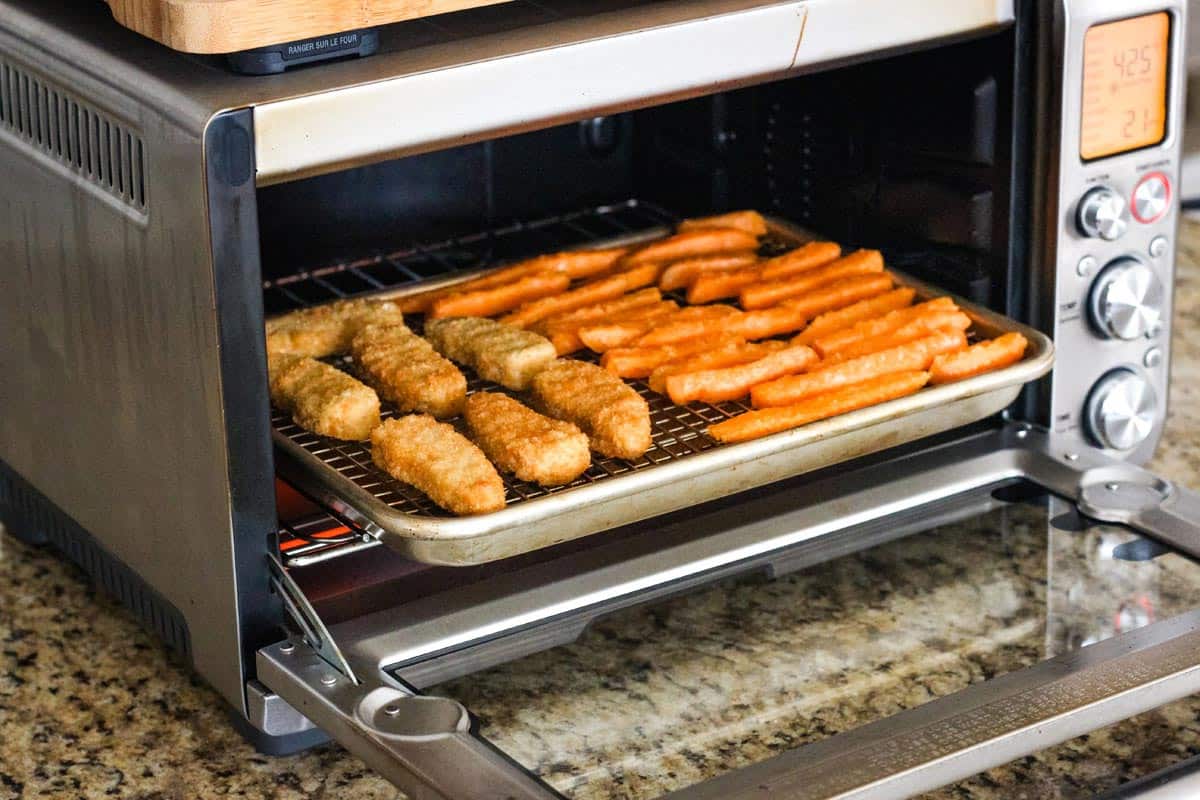
Frozen fries, tater tots, mozzarella sticks, and vegetable snacks often cook well. You usually do not need to thaw them first.
Arrange frozen food in one layer. A crowded tray traps steam and can leave the center soft.
Toast and baked foods
The oven can handle toast, bagels, biscuits, cookies, muffins, and small cakes. Watch baked food closely because the top may brown before the center is ready.
Use a lower rack position when the top browns too fast. Light-colored pans may also reduce excessive browning.
Reheated food
Use it to reheat pizza, roasted meat, quesadillas, and breaded foods. Start with a lower temperature and check early to prevent drying.
In my kitchen tests, reheated pizza was one of the clearest wins. The crust became firm again, while the microwave left it soft and chewy.

Tips for Better Cooking Results
Small changes can make a large difference. Treat the cooking chamber like a busy road: food needs room for hot air to move.
Preheat when the recipe needs it
Preheating helps food begin cooking at the right temperature. It matters most for baked goods, meats, and foods where crispness is important.
Some frozen foods can start in a cold oven, but the cooking time may change. Follow the appliance manual or package directions, then adjust based on results.
Avoid overcrowding
Spread food in a single layer when possible. Leave small gaps between pieces.
Overcrowding creates steam. Steam is useful for reheating some foods, but it works against a crisp surface.
Use a small amount of oil
Oil helps seasoning stick and supports browning. Spray or brush food lightly instead of pouring oil over it.
Do not spray oil directly into the heating chamber unless the manufacturer says it is safe. Aerosol sprays can damage some surfaces.
Turn food halfway through
Rotate the tray or turn larger pieces during cooking. This helps correct hot spots and encourages even color.
You may not need to turn small foods in a strong air stream, but checking them halfway is a useful habit.
Check food early
Recipes written for full-size ovens may cook faster in a countertop oven and air fryer. Begin checking several minutes before the suggested finish time.
Use visual cues for texture, but use a thermometer for meat and poultry. Color alone cannot confirm safety.
Keep the crumb tray clean
Crumbs and grease can smoke. Let the unit cool, unplug it, and clean it according to the manual.
One mistake I often see is cleaning only the basket while ignoring the oven floor and upper heating area. Those hidden crumbs can cause the next cooking session to smell burnt.
Common Mistakes to Avoid
Even a good appliance can give poor results when used the wrong way.
• Filling the basket or tray too tightly
• Skipping preheating for recipes that need it
• Using wet batter without a suitable pan
• Covering the air holes with foil
• Placing food too close to the top element
• Adding too much oil
• Leaving the appliance unattended
• Using cookware that is not rated for high heat
• Forgetting to clean grease and crumbs
• Trusting the preset time for every brand of food
Foil and parchment may be useful in some recipes, but they must not block airflow or touch heating elements. Use only products that are safe for the temperature and design of your appliance.

A Simple Cooking Method for Beginners
If you are new to a countertop oven and air fryer, begin with foods that are easy to monitor.
-
Read the manual and learn the controls.
-
Place the oven on a stable, heat-safe surface.
-
Preheat if the recipe calls for it.
-
Dry the food and season it lightly.
-
Arrange the food in one layer.
-
Set a shorter time than the package suggests.
-
Check the food halfway through cooking.
-
Turn or rotate the food if needed.
-
Check the internal temperature of meat.
-
Let the appliance cool before cleaning.
Start with frozen fries, toast, vegetables, or chicken tenders. These foods help you learn how quickly your particular model cooks.
Keep a simple note of temperature and time. After two or three uses, you will know whether your oven runs hot, needs extra time, or browns one side faster.
Is a Countertop Oven and Air Fryer Energy Efficient?
A countertop oven and air fryer may use less energy than a full-size oven for small meals because it has a smaller space to heat. It also often reaches cooking temperature faster.
Energy use depends on wattage, cooking time, preheating, food quantity, and the type of full-size oven used for comparison. A high-wattage countertop model running for a long time may not always use less energy.
The best approach is practical:
• Use the smaller appliance for small portions.
• Cook more than one item when the air can still circulate.
• Avoid long preheating when it is not needed.
• Turn the appliance off when cooking ends.
• Keep the door and seals clean.
Do not choose an appliance based only on energy claims. Look for testing details and compare the cooking task, not just the advertised wattage.
Countertop Oven and Air Fryer Safety
Safe use starts with placement and supervision. Keep the appliance away from water, walls, curtains, and clutter.
Use oven mitts when handling hot trays. The door, rack, pan, and food can remain hot after the timer ends.
Follow these safety rules:
• Never cover ventilation openings.
• Do not place plastic or paper inside unless the manual allows it.
• Use heat-safe cookware.
• Keep children away from the hot door and controls.
• Unplug the unit before deep cleaning.
• Stop using it if the cord or plug is damaged.
• Clean grease before it becomes a smoke risk.
For meat and poultry, rely on a food thermometer and safe handling practices. Refrigerate leftovers within two hours, or within one hour when the room temperature is above 90°F.
Frequently Asked Questions About Countertop Oven and Air Fryer
Is a countertop oven and air fryer better than a regular air fryer?
Neither is best for every kitchen. A basket air fryer often cooks small portions quickly, while a countertop oven and air fryer offers more space and functions such as baking, toasting, and broiling.
Can you use aluminum foil in a countertop oven and air fryer?
You may use foil in some models, but it must not block airflow or touch heating elements. Always follow the manufacturer’s instructions before using foil.
Do you need to preheat a countertop oven and air fryer?
Preheating usually improves results for baking, roasting, and crisping. Some frozen foods can cook without preheating, but the cooking time and texture may change.
Can you cook raw chicken in a countertop oven and air fryer?
Yes, you can cook raw chicken if the pieces are arranged safely and reach 165°F internally. Use a food thermometer because outside color does not prove that chicken is fully cooked.
Does air frying make food healthy?
Air frying can reduce the amount of oil used compared with deep frying. However, the overall nutrition still depends on the food, coating, portion size, salt, and added fat.
Can a countertop oven and air fryer replace a microwave?
It can replace some microwave tasks, especially reheating pizza and other foods that benefit from crispness. It is slower and less suitable for liquids, soup, and soft foods.
Conclusion
A countertop oven and air fryer is a flexible tool for small meals, crisp leftovers, roasted vegetables, toast, pizza, and baked foods. It offers more cooking space than a basket air fryer, while heating a smaller chamber than a full-size oven.
Choose a model that fits your counter, cooking habits, family size, and cleaning needs. For the best results, avoid overcrowding, check food early, use a thermometer for meat, and keep the crumb tray clean.
Start with one simple recipe this week and adjust the time to suit your appliance. Then explore more recipes, share your favorite cooking tips, and leave a comment about what you make first.

One Comment