How To Dehydrate Oranges In Air Fryer: Easy Guide
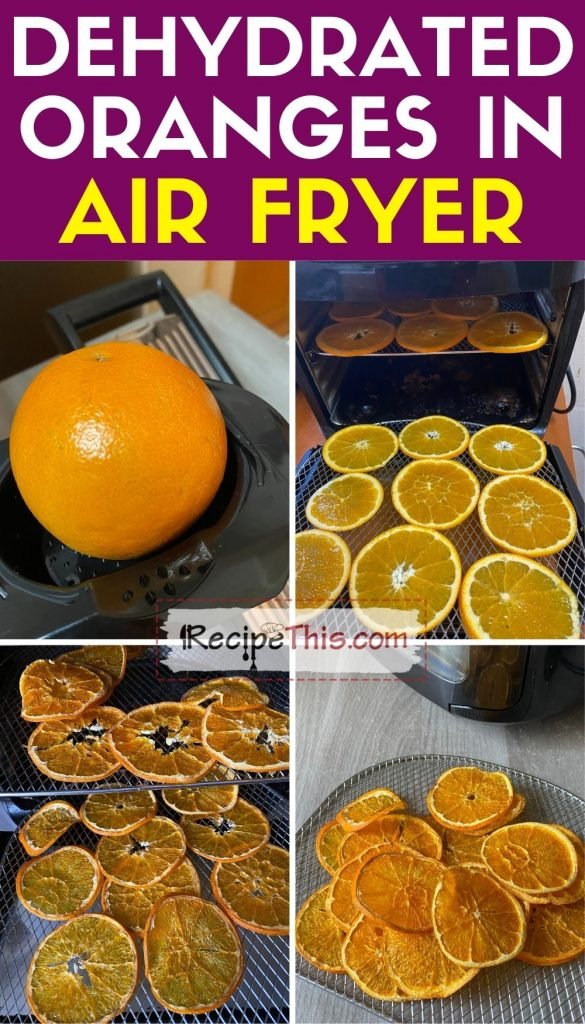
Dehydrating oranges in an air fryer is a simple way to make chewy citrus slices for snacking, cocktails, tea, cake decorating, potpourri, and holiday crafts. In a U.S. kitchen, the best results usually come from slicing oranges thinly, removing excess juice, arranging the slices in a single layer, and using the air fryer’s lowest temperature or dedicated dehydrate setting.
Most orange slices take 4 to 10 hours to dry, depending on slice thickness, orange variety, air fryer design, and the final texture you want.

What You Need to Dehydrate Oranges
You need only a few basic supplies:
- Fresh oranges
- A sharp knife or mandoline slicer
- Cutting board
- Paper towels or a clean kitchen towel
- Air fryer with a dehydrate function or a low-temperature setting
- Cooling rack or plate
- Airtight storage container
Which oranges work best?
Nearly any orange can be dehydrated, including:
- Navel oranges
- Valencia oranges
- Cara Cara oranges
- Blood oranges
- Mandarin oranges
- Tangelos
Navel and Valencia oranges produce attractive, medium-sized slices. Blood oranges create deep red and purple tones, making them especially useful for drink garnishes and decorations. Smaller mandarins dry more quickly but may curl more easily.
The peel is edible when the fruit is properly washed, although it can become bitter as it dries. For edible slices, choose oranges with firm skin and no mold, bruising, or damaged areas.
How thick should orange slices be?
Slice oranges between ⅛ and ¼ inch thick:
- ⅛-inch slices: Dry faster and become crisp or nearly crisp.
- ¼-inch slices: Remain more flexible and chewy but need more drying time.
Try to keep every slice close to the same thickness. Uneven slices can finish at different times, which makes it harder to prevent thin pieces from over-drying while thick pieces remain moist.
How to Dehydrate Oranges in an Air Fryer
Follow these steps for evenly dried orange slices.
1. Wash and dry the oranges
Rinse the oranges under cool running water and scrub the peel gently with a clean produce brush if you plan to eat the rind. Dry the fruit thoroughly.
Washing removes surface dirt and reduces contamination from handling. Do not use soap or household cleaners on the oranges.
2. Slice the oranges evenly
Cut off a very small piece from each end, then slice the oranges crosswise. Aim for slices that are approximately ⅛ to ¼ inch thick.
Remove visible seeds with the tip of a knife. Seeds can become harder to remove after drying and may add bitterness.
3. Blot away excess juice
Place the slices between paper towels and press gently. Do not crush the fruit. Removing surface moisture helps the slices dry more efficiently and reduces dripping inside the air fryer.
This step is particularly useful for very juicy oranges or slices thicker than ⅛ inch.
4. Arrange the slices in a single layer
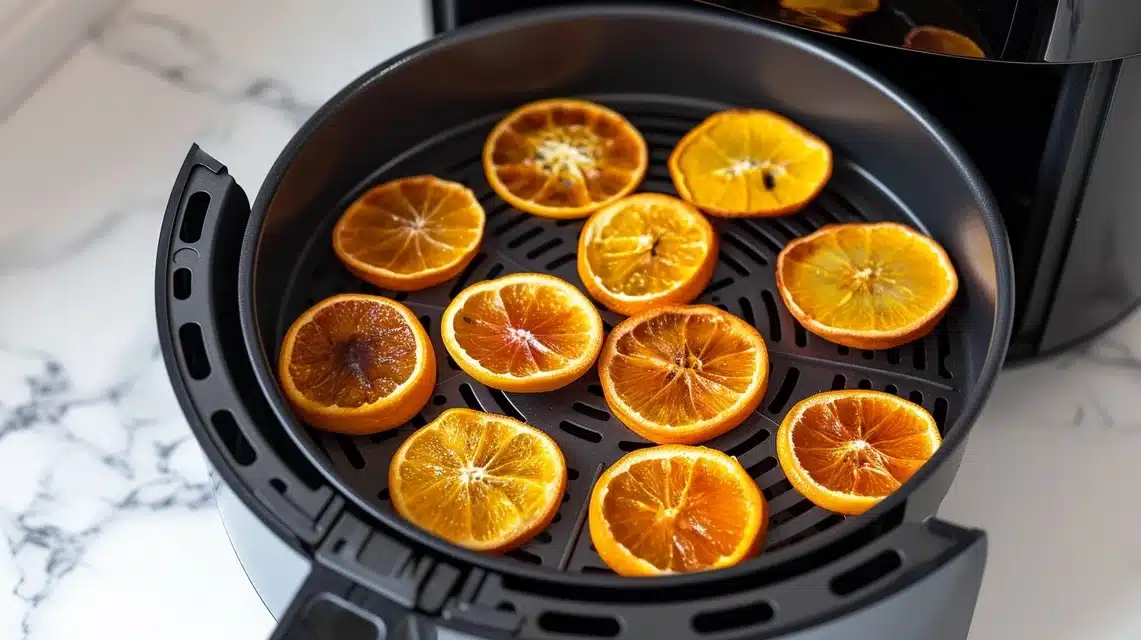
Place the orange slices in the air fryer basket or on the appliance’s dehydrator racks. Leave a little space between slices so air can circulate.
Do not stack the slices. Overlapping fruit traps moisture and leads to uneven drying.
If your air fryer has multiple racks, use them only if the manufacturer permits it. Some models require rotating or rearranging the racks during the cycle.
5. Set the temperature
Use the air fryer’s dehydrate setting at approximately 135°F to 145°F when available.
If your model does not have a dehydrate function, select the lowest temperature listed in the manual. Many standard air fryers do not go below 170°F, which is hotter than ideal for slow dehydration. At that temperature, the orange slices may brown, caramelize, or become brittle before they dry evenly.
Avoid lowering the temperature beyond the appliance’s documented settings or operating the air fryer with the basket or door positioned in a way the manufacturer does not approve.
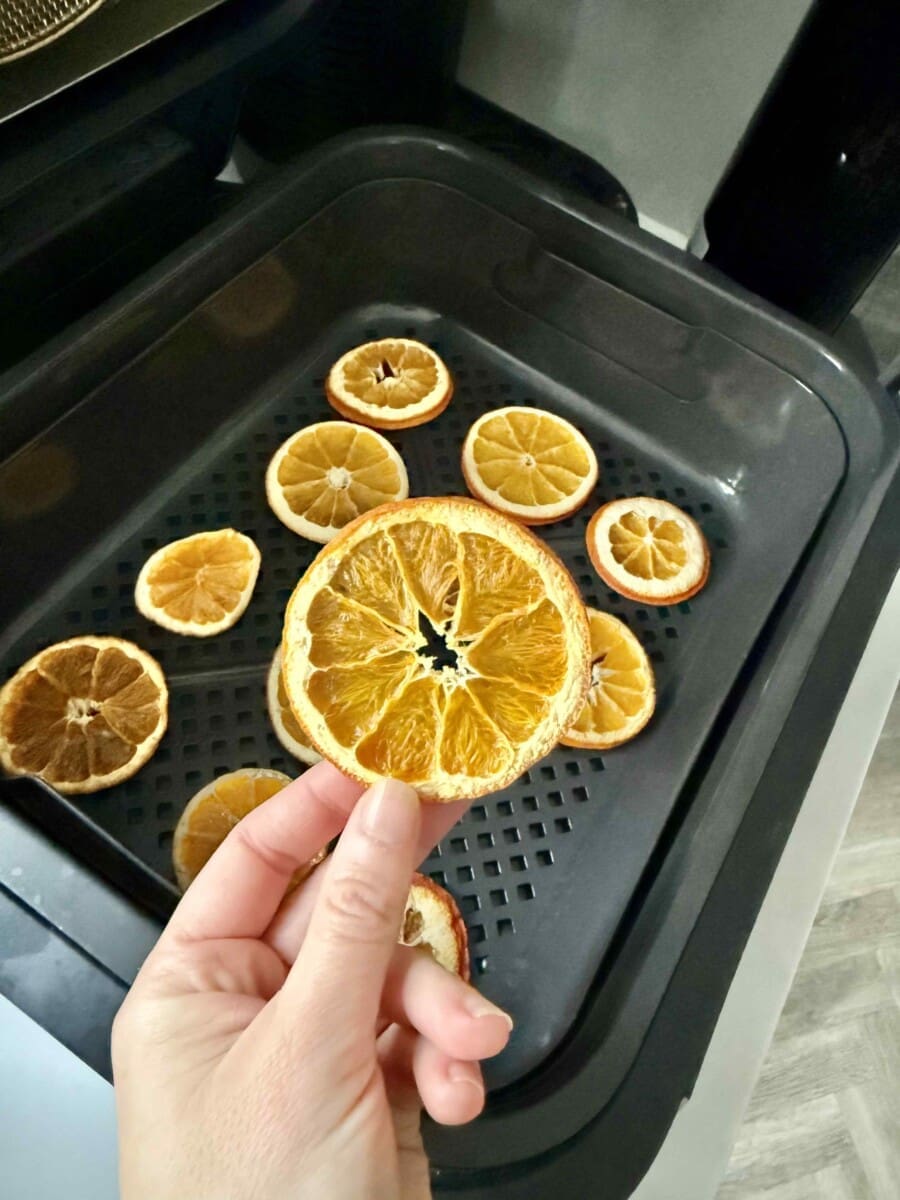
6. Dry the oranges and check them regularly
Start checking the slices after about 4 hours. Flip them or rotate the trays if the air fryer’s design creates uneven airflow.
Continue drying until the slices reach the texture you want:
- Flexible and chewy for snacking
- Firm and mostly dry for cocktails
- Crisp for decoration or long-term storage
Thicker slices may require 8 to 10 hours or longer. Drying time is not fixed because air fryer capacity, humidity, slice thickness, and orange moisture all affect the result.
7. Cool the slices completely
Transfer the finished slices to a cooling rack or clean plate. Let them cool completely before storing them.
Warm fruit can release residual moisture into a storage container. That condensation may soften the slices and increase the risk of mold.
Best Air Fryer Temperature and Drying Time
The best temperature for dehydrating oranges is the lowest setting that provides steady warm airflow without aggressively cooking the fruit.
| Air fryer setting | Approximate result | Typical drying range |
|---|---|---|
| 135°F to 145°F, dehydrate mode | More even drying and brighter color | 6–10 hours |
| 150°F to 160°F | Faster drying with some browning possible | 4–8 hours |
| 170°F or higher | May cook or brown the oranges | Check frequently |
These ranges are estimates rather than guarantees. The orange slices are ready when the centers no longer feel wet or sticky.
Should orange slices be crisp or chewy?
That depends on how you plan to use them:
- For eating: Stop when the slices are leathery, pliable, and no longer wet.
- For cocktails: Dry them until firm but still slightly flexible.
- For tea: Either chewy or crisp slices work well.
- For crafts and potpourri: Dry until stiff and free of soft, moist areas.
- For longer storage: Aim for a drier texture and store the cooled slices carefully.
A slice that feels dry on the outside but wet in the center needs additional time. Cut one of the thickest pieces open to check its interior.
How to Tell When Dehydrated Oranges Are Done
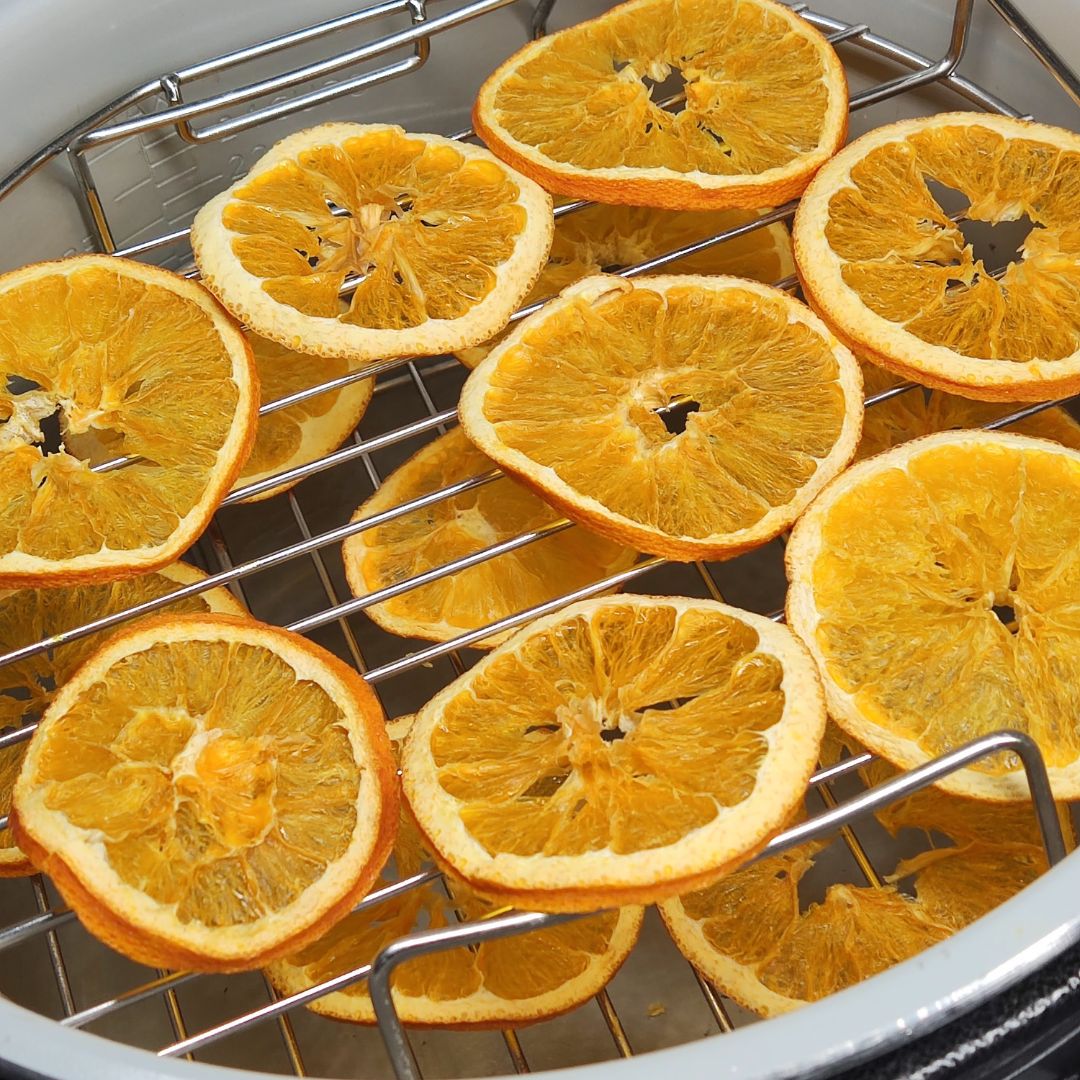
Properly dehydrated orange slices should have a reduced, darker appearance and a firm texture. They should not release juice when pressed lightly.
Use these signs as a guide:
- The slices feel dry rather than wet or tacky.
- The center is not noticeably softer than the edges.
- No liquid collects on the basket or tray.
- The slices hold their shape when lifted.
- The peel feels firm and leathery.
- The fruit has a concentrated citrus aroma without a burnt smell.
The slices may still feel slightly flexible immediately after removal. They become firmer as they cool.
If a slice is crisp around the outside but soft in the middle, return it to the air fryer. Check it every 30 to 60 minutes until the moisture is gone.
Common Problems When Dehydrating Oranges
The oranges are taking too long
Possible causes include:
- Slices are too thick.
- The basket is overcrowded.
- The oranges are unusually juicy.
- The air fryer has weak or uneven airflow.
- The temperature is too low for the appliance to maintain consistently.
- Humidity is high.
Blot the slices again, separate them, and continue drying. For the next batch, use thinner slices and avoid filling every available space.
The oranges are burning or turning dark
A little color change is normal, but dark brown edges or a burnt smell usually indicate excessive heat.
Try the following:
- Use the dehydrate setting instead of a standard air-fry program.
- Choose a lower temperature if your model allows it.
- Check the slices more frequently.
- Move thinner slices out earlier.
- Avoid placing the fruit too close to a powerful top heating element.
At 170°F or higher, sugar in the oranges can brown before the interior is fully dehydrated.
The slices are sticking
Sticky slices usually contain concentrated sugar or excess moisture. Allow the fruit to cool before trying to lift it. If necessary, use a silicone spatula or carefully peel the slices away from the rack.
For future batches, blot the slices more thoroughly and avoid placing them directly against one another.
The oranges are curling
Curling is common, particularly with thin slices and slices containing a thick rind. It does not necessarily mean the fruit has failed.
To reduce curling:
- Slice the oranges evenly.
- Avoid excessively high heat.
- Flip the slices during drying.
- Use dehydrator racks if your air fryer supports them.
- Place a compatible rack above the fruit only if the appliance manual allows it and airflow remains unobstructed.
Do not weigh the slices down with foil or other objects unless the manufacturer specifically approves that practice.
How to Store Dehydrated Orange Slices
Store orange slices only after they have cooled completely.
Place them in:
- A clean, airtight glass jar
- A food-safe airtight plastic container
- A resealable freezer bag for short-term use
Keep the container in a cool, dry, dark location. Light can fade the color, while heat can soften the fruit and shorten its storage life.
Check the container after the first day. If you see condensation, moisture, or slices becoming noticeably soft, dry them again before returning them to storage.
For the most cautious storage approach:
- Refrigerate slices that retain some softness.
- Freeze slices for longer storage.
- Discard any fruit showing mold, unusual odor, or wet, slimy areas.
- Do not taste questionable slices to decide whether they are safe.
Home-dehydrated fruit does not have the same controlled moisture level as commercially packaged dried fruit. Dryness, storage temperature, and handling all affect how long it remains usable.
How to Use Air-Fryer-Dried Oranges
Dried orange slices are useful for both food and decoration.
Food and drinks
Use them to:
- Garnish cocktails, mocktails, and iced tea
- Flavor hot tea or mulled beverages
- Decorate cakes and cupcakes
- Add to granola or trail mix
- Serve with cheese boards
- Add citrus flavor to simmering water or spiced drinks
The peel contributes strong citrus aroma but may taste bitter. If you prefer a milder flavor, peel the oranges before slicing or use only the dried flesh.
Crafts and home fragrance
Fully dried slices can be used for:
- Wreaths
- Garlands
- Gift wrapping
- Holiday ornaments
- Potpourri
- Table centerpieces
For crafts, dry the oranges until they are firm throughout. Any remaining moisture can lead to mold during storage.
Food Safety and Air Fryer Precautions
Wash oranges before slicing, keep the preparation surface clean, and use clean storage containers.
An air fryer removes moisture, but it does not automatically make every food shelf-stable. Drying time and final moisture content vary by appliance and fruit. If you are preparing orange slices for sale, gifting, or long-term storage, follow a tested food-preservation method rather than relying only on appearance.
Also follow your air fryer’s operating instructions. Models differ in minimum temperature, rack placement, airflow, and whether they support dehydration. Do not block vents, overload the basket, or use parchment paper in a way that restricts airflow or could contact the heating element.
Key Takeaways
- Slice oranges ⅛ to ¼ inch thick for even drying.
- Use a dehydrate setting around 135°F to 145°F when available.
- Dry the slices in a single layer and leave space for airflow.
- Expect roughly 4 to 10 hours, depending on thickness and appliance settings.
- Cool the oranges fully before storing them.
- Refrigerate or freeze slices if they remain soft or if you are uncertain about their dryness.
- Discard slices with mold, off odors, or visible moisture.
FAQs About Dehydrating Oranges in an Air Fryer
Can I dehydrate oranges without a dehydrate setting?
Yes, if your air fryer has a low-temperature setting. Use the lowest temperature allowed by the manufacturer and check the slices often. A standard setting of 170°F or higher may brown the oranges quickly, so the result may be darker and more brittle than fruit dried at a lower temperature.
Do I need to peel oranges before dehydrating them?
No. You can dry orange slices with the peel attached, provided you wash the fruit first. The peel adds color and aroma but may taste bitter. Peel the oranges before slicing if you want a milder snack.
Can I dehydrate orange wedges or quarters?
You can, but wedges contain more internal moisture and take substantially longer than thin crosswise slices. They are also more likely to remain soft in the center. Thin rounds are the most predictable shape for air-fryer dehydration.
Why are my dehydrated oranges sticky?
Sticky slices usually contain concentrated natural sugars or residual moisture. Continue drying them at a low temperature and let them cool before judging the final texture. If they become wet again inside the storage container, dry them further before storing.
Can I use dried oranges in drinks?
Yes. Dried orange slices work well as garnishes for cocktails, mocktails, iced tea, hot tea, and spiced beverages. Rinse them briefly if they have been stored for a long time or used for decoration, and do not use slices that show mold or an unusual smell.
How long do dehydrated oranges last?
There is no single guaranteed storage period for home-dried oranges because moisture levels and storage conditions vary. Properly dried slices last longer in an airtight container kept cool, dark, and dry. Refrigerate or freeze them when in doubt, and discard any slices that develop mold, excess moisture, or an off odor.
Conclusion
To dehydrate oranges in an air fryer, wash and slice the fruit evenly, blot away excess juice, arrange the slices in a single layer, and dry them at the lowest suitable temperature. Start checking after four hours, then continue until the slices are leathery or crisp according to your intended use.
For the most consistent batch, use a dedicated dehydrate setting between 135°F and 145°F, avoid overcrowding, rotate the slices when needed, and cool them completely before storage.