
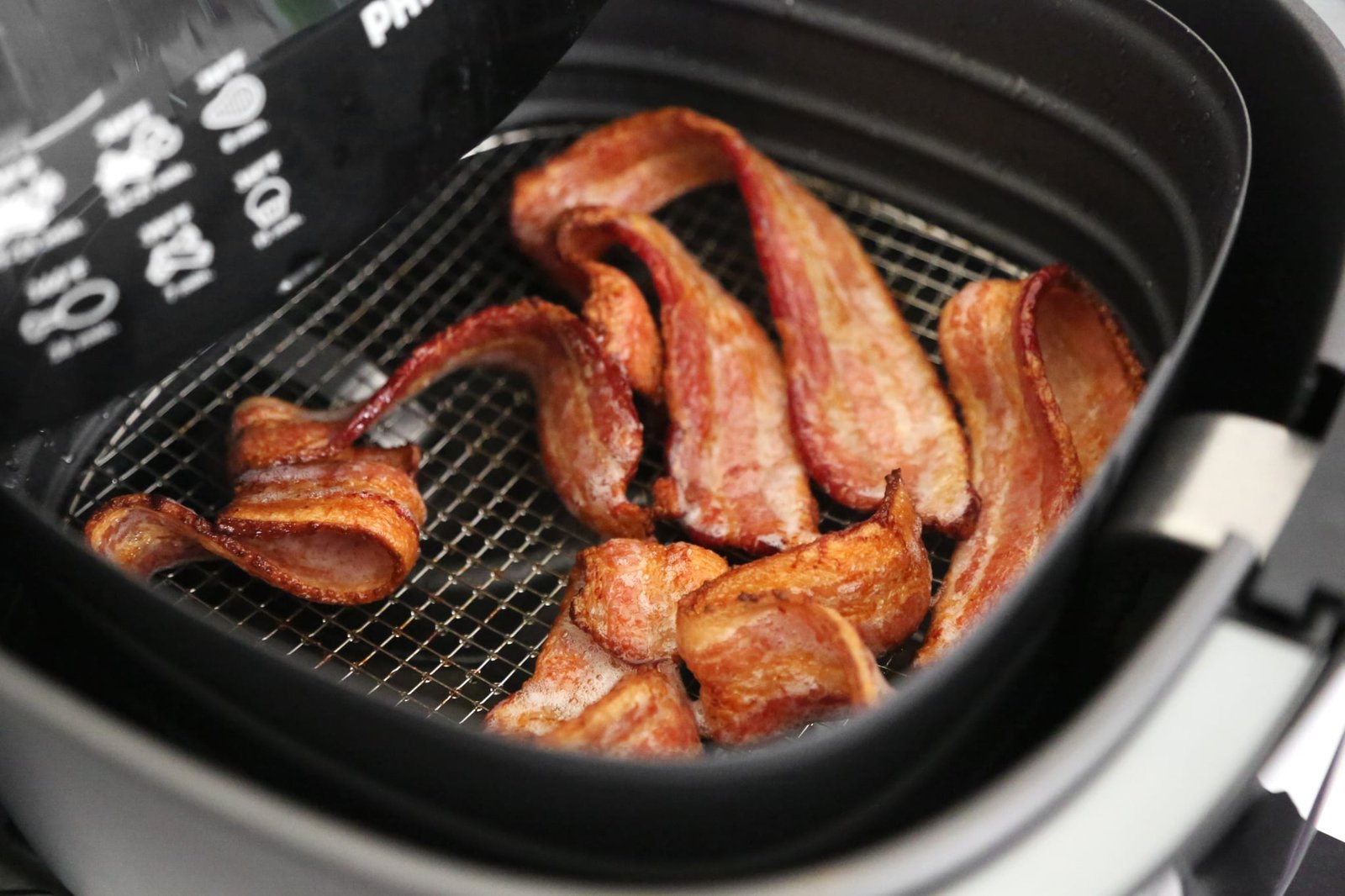
How To Cook Bacon In An Air Fryer: Crispy Easy Guide
Cooking bacon in an air fryer is one of the easiest ways to make crisp, evenly browned bacon in a U.S. home kitchen. Arrange the bacon in a single layer, cook it at 350°F for about 8 to 12 minutes, and adjust the time for the thickness and texture you prefer. Check it early because air fryer models vary.
This method uses less hands-on attention than a skillet and keeps most of the grease contained in the appliance. It works with regular-cut, thick-cut, and turkey bacon, although each type may need a different cooking time.

Why Cook Bacon in an Air Fryer?
An air fryer cooks bacon by circulating hot air around the strips. The circulating heat renders fat while the bacon surface browns, producing crisp edges and a chewy or crisp center depending on the cooking time.
Compared with stovetop cooking, air frying bacon can offer several practical benefits:
- Less splattering: The basket or cooking chamber contains most of the grease.
- Hands-off cooking: You do not need to stand over a hot skillet.
- Consistent browning: Hot air reaches the exposed bacon surface from multiple directions.
- Easy batch cooking: You can cook several strips at once, depending on the basket size.
- Convenient cleanup: The basket and drawer usually remove easily for washing.
Air frying does not automatically make bacon healthier. Bacon still contains significant sodium and fat, and the amount of grease depends on the cut and brand. The main advantage is convenience and texture, not a guaranteed nutritional improvement.
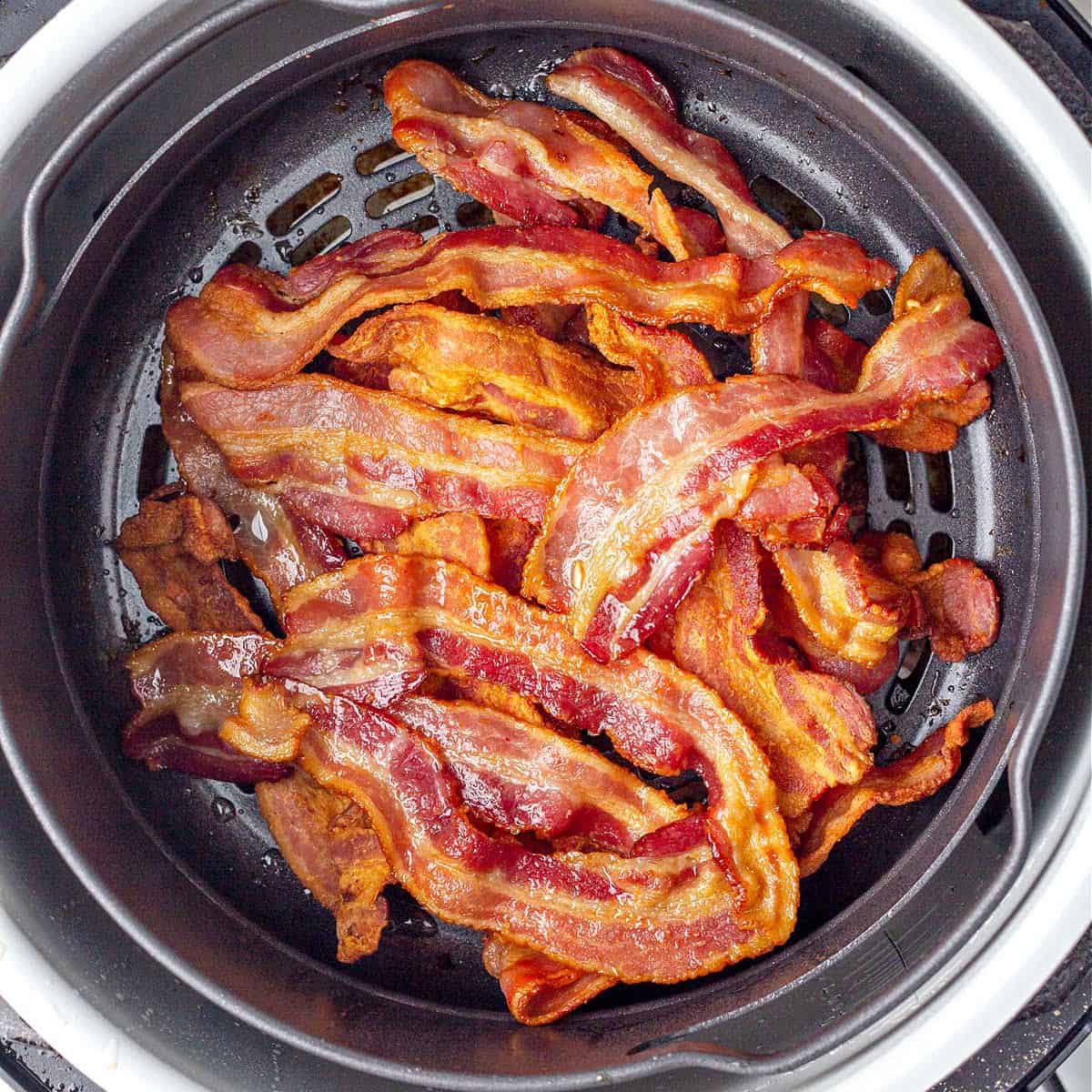
What You Need
You only need a few basic items:
- Bacon
- An air fryer
- Tongs or a fork
- A plate
- Paper towels, if you want to drain excess grease
Use bacon that has been kept refrigerated according to the package instructions. Regular-cut pork bacon is the easiest type to start with because it cooks relatively quickly and fits most air fryer baskets.
Choosing bacon
Different types of bacon behave differently in an air fryer:
| Bacon type | Typical cooking time at 350°F | Expected result |
|---|---|---|
| Regular-cut pork bacon | 8–10 minutes | Crisp edges with a tender center |
| Thick-cut pork bacon | 10–14 minutes | Meatier texture and longer chew |
| Turkey bacon | 7–10 minutes | Leaner, drier, and often less greasy |
| Pre-cooked bacon | Follow package directions | Usually requires brief reheating |
These times are starting points rather than guarantees. Strip thickness, sugar content, basket design, air circulation, and the amount of bacon can all change the result.

How to Cook Bacon in an Air Fryer
1. Check your air fryer
Before cooking, confirm that the basket and drawer are clean and that the bacon will sit below the maximum fill line. A crowded basket blocks airflow and can leave some strips pale or soft.
You generally do not need to add oil. Bacon releases its own fat as it cooks.
2. Decide whether to preheat
Preheating is optional. A preheated air fryer may cook bacon more quickly and can help the fat begin rendering immediately. Starting in a cold air fryer can also work, but the total cooking time may be longer.
If you preheat, use 350°F for about 3 minutes, unless your appliance manufacturer gives different instructions.
3. Arrange the bacon
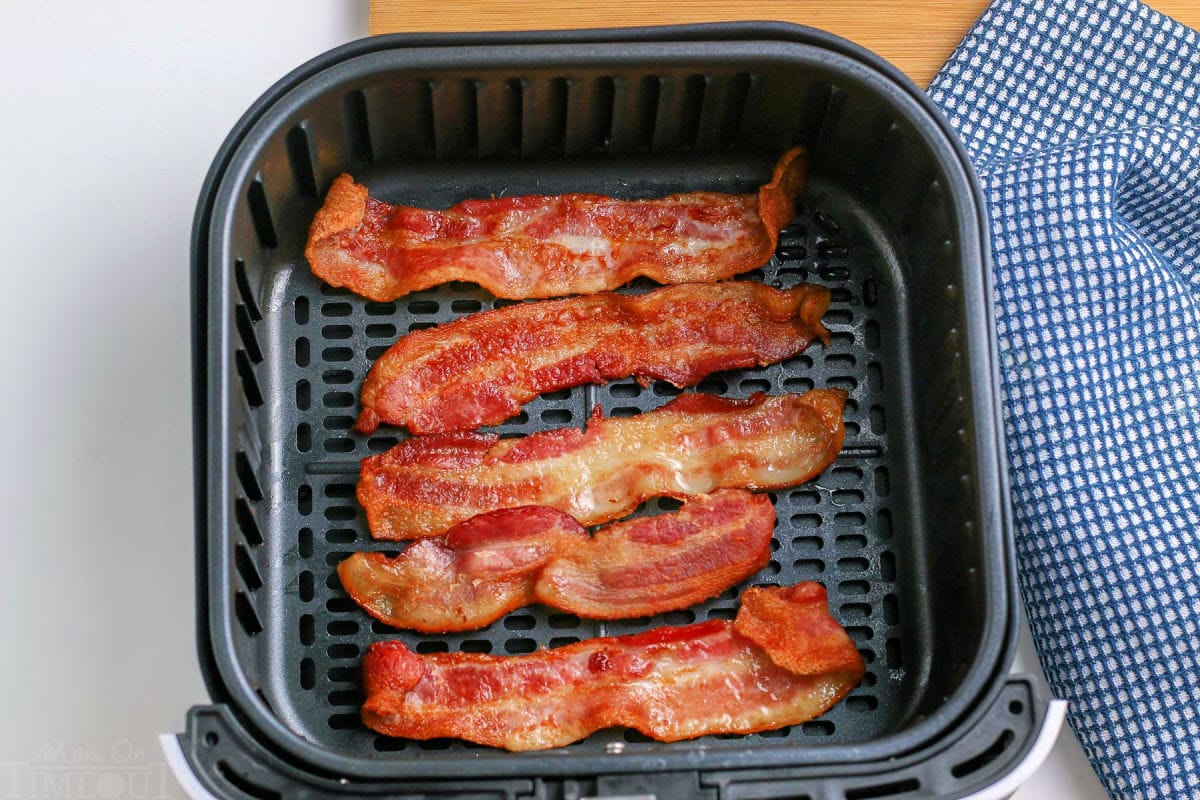
Place the bacon in a single layer in the air fryer basket. The strips may touch slightly, but avoid overlapping them. Overlapping prevents hot air from reaching the covered areas and can produce uneven cooking.
If the strips are too long for the basket, cut them in half before cooking. Do not force bacon against the sides of the basket if doing so prevents the drawer from closing properly.
4. Air fry at 350°F
Cook the bacon at 350°F using these approximate starting times:
- Regular-cut bacon: begin checking at 8 minutes
- Thick-cut bacon: begin checking at 10 minutes
- Turkey bacon: begin checking at 7 minutes
For softer bacon, remove it when the center is browned but still flexible. For crisp bacon, continue cooking until the surface is deeply browned and the strip feels firmer.
The bacon will become slightly crisper as it cools, so avoid cooking it far beyond your preferred texture.
5. Check and turn if needed
Some air fryers brown bacon evenly without turning. Others benefit from turning the strips halfway through cooking, especially if the basket has limited airflow underneath.
At the halfway point:
- Pull out the basket carefully.
- Separate strips if they have shifted together.
- Turn the bacon with tongs if one side is browning faster.
- Continue cooking until it reaches the texture you want.
6. Drain and serve
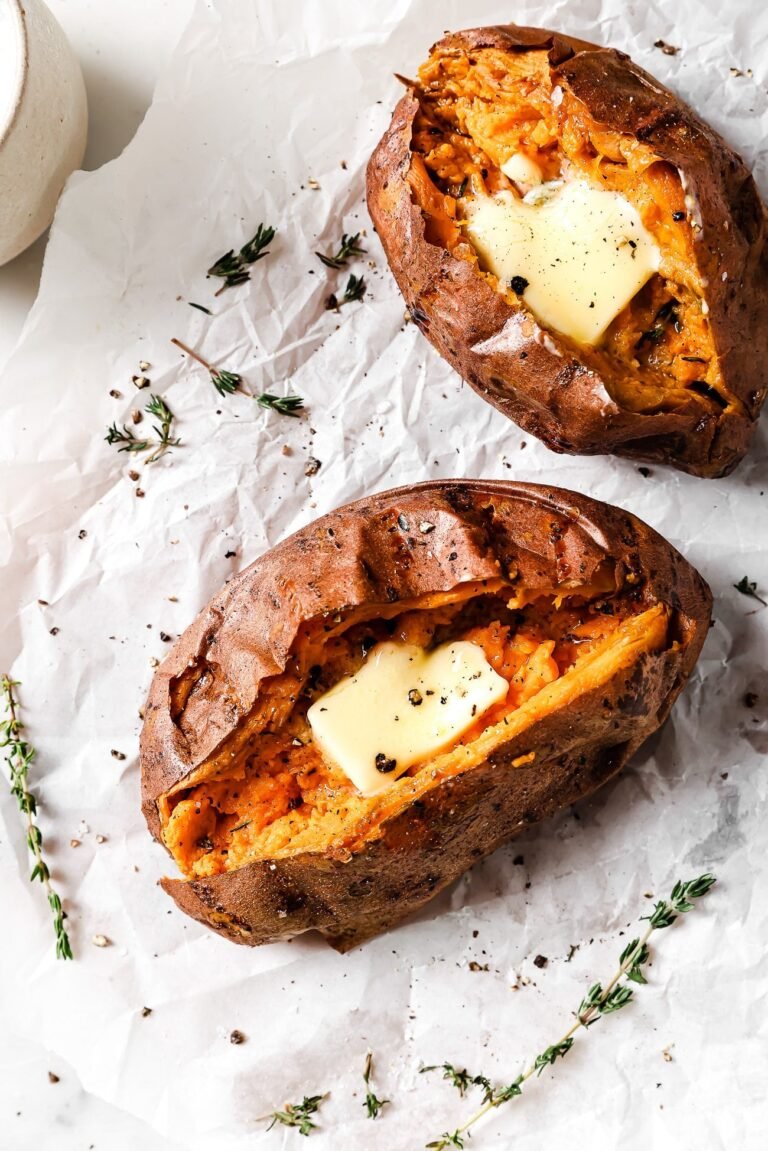
Transfer the cooked bacon to a paper towel-lined plate for a minute or two. Serve it with eggs, pancakes, breakfast sandwiches, burgers, salads, baked potatoes, or any recipe that calls for cooked bacon.
Handle the basket and grease carefully because both can remain very hot after cooking.
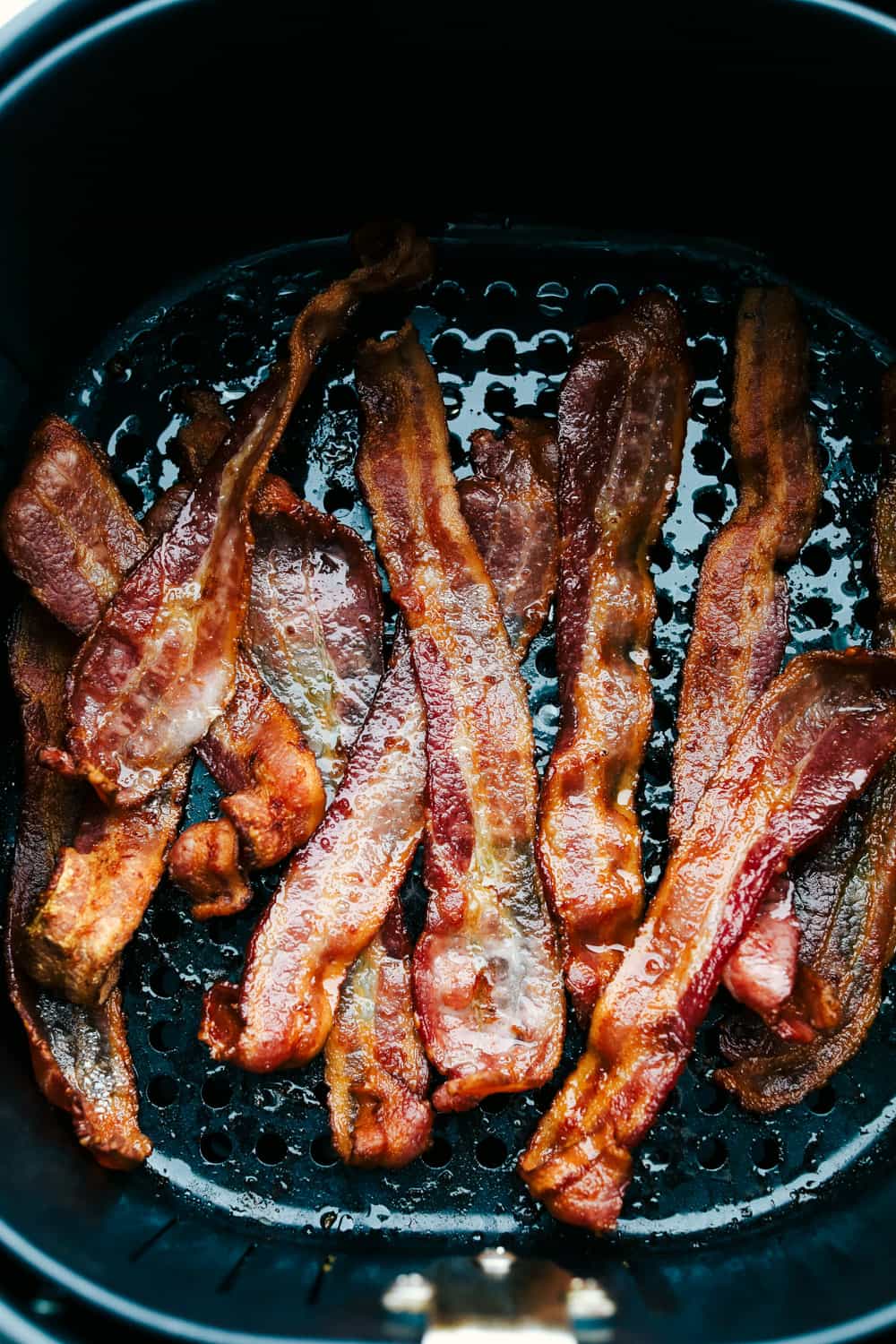
How Long to Cook Bacon in an Air Fryer
The best cooking time depends mainly on bacon thickness and your preferred texture. Use the following guide as a practical starting point:
| Desired texture | Regular-cut bacon | Thick-cut bacon |
|---|---|---|
| Tender and lightly browned | 7–8 minutes | 9–11 minutes |
| Chewy with browned edges | 8–10 minutes | 11–13 minutes |
| Very crisp | 10–12 minutes | 13–16 minutes |
These ranges assume a single layer at 350°F. A cold air fryer, a full basket, or especially thick strips may require additional time.
Should you cook bacon at 400°F?
You can cook bacon at 400°F, but 350°F is usually easier to control. The higher temperature may shorten cooking time, but it can also cause:
- Burned edges before the center is crisp
- More smoke from rendered grease
- Faster browning of sugar-cured bacon
- Greater risk of splattering
If you use 400°F, start checking several minutes earlier and stay nearby. The correct temperature also depends on the appliance's instructions and design.
Do you need to flip bacon?
No. Flipping is optional. Thin bacon often cooks evenly without turning, while thick-cut bacon or a crowded basket may benefit from a flip halfway through.

How to Prevent Air Fryer Bacon From Smoking
Smoking usually occurs when bacon grease becomes too hot, accumulates near the heating element, or contains burned residue from an earlier cooking cycle.
Try these steps:
- Lower the temperature to 325–350°F.
- Clean old grease from the drawer and heating area after the appliance cools.
- Avoid overfilling the basket.
- Watch sugary or heavily seasoned bacon, which can brown quickly.
- Use the manufacturer's guidance before adding anything to the drawer.
- Stop the appliance immediately if you see flames or heavy smoke.
Some cooks place a small amount of water in the bottom drawer to reduce smoke from grease. Do this only if the air fryer manufacturer permits it. Water should never be added to the cooking basket unless the appliance instructions specifically allow that setup, and water must not contact electrical components.
Never leave an air fryer unattended while cooking bacon. If a grease fire occurs, turn off and unplug the appliance if it is safe to do so, keep the drawer closed, and never pour water onto a grease fire. Call emergency services if the fire does not stop promptly.

Common Problems and How to Fix Them
Bacon is undercooked
Possible causes:
- The strips were thick or tightly packed.
- The air fryer was not preheated.
- The basket was filled beyond a single layer.
- The cooking time was too short.
Fix: Return the bacon to the air fryer in a single layer and cook for 1–2 minutes at a time until it reaches the desired texture.
Bacon is burnt
Possible causes:
- The temperature was too high.
- The strips were unusually thin.
- The bacon contained sugar or a sweet glaze.
- The basket was left unattended after the bacon had finished.
Fix: Lower the temperature to 325–350°F and begin checking earlier. Sweet bacon may need closer monitoring than plain cured bacon.
Bacon is not crisp
Possible causes:
- Too much bacon was placed in the basket.
- Strips overlapped.
- The bacon was removed before the rendered fat finished cooking.
- It was transferred directly to a plate without draining.
Fix: Cook smaller batches, separate the strips, and add another 1–3 minutes of cooking time. Remember that bacon firms as it cools.
Bacon curls or folds over
Curling is common, especially with thinner bacon. It happens as the meat and fat shrink at different rates.
To reduce curling:
- Arrange the strips flat before cooking.
- Avoid stacking bacon.
- Turn the strips halfway through if needed.
- Use tongs to gently flatten them after cooking.
Some curling does not affect flavor or safety, and curled bacon can be useful for sandwiches or chopped toppings.
The air fryer makes a loud popping sound
Bacon fat can pop as moisture escapes. A small amount of popping may be normal, but stop the appliance if you see flames, excessive smoke, or grease escaping from the drawer.
Clean the appliance after it cools and check the manufacturer's instructions before using it again.
How to Cook Bacon in Batches
If you need more bacon than fits in a single layer, cook it in batches rather than stacking the strips. Stacking prevents even airflow and increases the chance of soft, unevenly cooked bacon.
For multiple batches:
- Remove the first batch and drain it.
- Check the grease level in the drawer.
- Carefully pour off excess grease only after it has cooled enough to handle safely.
- Wipe away heavy residue if needed.
- Add the next batch in a single layer.
- Begin checking the second batch earlier because the appliance is already hot.
Save strained bacon grease only if you plan to use it promptly and store it safely. Keep it in a covered, heat-resistant container and refrigerate it rather than leaving it at room temperature for extended periods.

Is Air-Fryer Bacon Safe?
Air-fryer bacon is safe when you use the appliance correctly, prevent grease fires, and handle raw pork responsibly.
Follow these precautions:
- Wash your hands after handling raw bacon.
- Keep raw bacon away from ready-to-eat foods.
- Use clean utensils and plates.
- Do not touch the hot basket or grease with bare hands.
- Avoid filling the basket above the manufacturer's maximum line.
- Keep the air fryer on a stable, heat-resistant surface.
- Do not move the appliance while it contains hot grease.
- Never pour water onto burning grease.
- Refrigerate cooked bacon within two hours, or within one hour if the surrounding temperature is above 90°F.
- Store cooked bacon in a sealed container in the refrigerator and use it within about 3–4 days.
For packaged bacon, follow any cooking, storage, and handling directions printed on the label. If bacon smells sour, feels unusually slimy, or shows signs of spoilage, discard it.

How to Store and Reheat Air-Fryer Bacon
Cooked bacon can be stored in the refrigerator for several days. Let it cool briefly, place it in an airtight container or sealed bag, and refrigerate it promptly.
To reheat bacon:
- Air fryer: 350°F for 1–3 minutes
- Skillet: Medium-low heat until warm
- Microwave: Short intervals on a paper towel-lined plate
The air fryer generally restores crispness better than the microwave. Check frequently because thin bacon can overcook quickly during reheating.
You can also freeze cooked bacon. Place cooled strips in a freezer-safe container with parchment or wax paper between layers. Reheat from frozen in short intervals, checking the texture as it warms.

Tips for Better Air-Fryer Bacon
Use these adjustments to improve consistency:
- Start checking early rather than relying on a fixed time.
- Cook bacon in a single layer.
- Use 350°F for a balance of browning and control.
- Lower the temperature for sweet, glazed, or very thin bacon.
- Turn thick-cut bacon halfway through.
- Drain the bacon before serving so it stays crisp.
- Clean grease from the drawer after the appliance cools.
- Record the time that works for your specific air fryer and bacon brand.
The biggest variable is not the recipe but the appliance. Two air fryers set to the same temperature may circulate air differently, so your first batch should be treated as a test for future cooking.

Frequently Asked Questions
Can you put raw bacon directly in an air fryer?
Yes. Place raw bacon directly in the air fryer basket in a single layer. You generally do not need to add oil because bacon releases fat while cooking.
Do you need to preheat an air fryer before cooking bacon?
No. Preheating is optional. A preheated appliance may cook the bacon faster, while a cold start may require a few extra minutes. Follow your air fryer's instructions and check the bacon early.
Can you cook frozen bacon in an air fryer?
Frozen bacon can be difficult to separate and arrange evenly. Thawing it in the refrigerator first usually produces better results. If cooking from frozen, use a low initial temperature only long enough to separate the strips, then arrange them in a single layer and finish cooking according to the bacon's thickness.
Can you cook turkey bacon in an air fryer?
Yes. Turkey bacon usually cooks quickly and contains less fat, so check it earlier than regular pork bacon. It may become dry or overly crisp if left in the air fryer too long.
Can you cook bacon and eggs together in an air fryer?
Only if your air fryer has a suitable oven-safe pan or accessory and the cooking times are compatible. Raw egg should not be poured directly into a basket with open holes. Cook bacon first, then use an approved pan for eggs.
What should you do with the bacon grease?
Allow the grease to cool before handling it. You may discard it in the trash after it solidifies or strain and refrigerate it for appropriate cooking uses. Do not pour bacon grease down the sink because it can harden and contribute to clogged plumbing.
Conclusion
To cook bacon in an air fryer, arrange the strips in a single layer and cook them at 350°F for approximately 8–12 minutes, checking early and adjusting for thickness. Use less time for turkey or thin bacon and more time for thick-cut strips.
For the best results, avoid overcrowding, monitor the first batch closely, handle hot grease carefully, and clean the air fryer after it cools. Once you learn how quickly your appliance cooks, air-fryer bacon becomes a simple, repeatable way to prepare breakfast or toppings with minimal hands-on work.


One Comment