

How To Choose Air Fryer: Smart Buying Guide
Introduction
The best air fryer for your U.S. kitchen is the one that fits your counter, cooks enough food for your household, and feels easy to clean after use. Start with capacity, then check the basket shape, controls, power, safety marks, and warranty. Extra cooking modes matter less than a design you will use often.
Air fryers use fast-moving hot air to brown food with little oil. They do not truly “fry” food like a deep fryer, but they can make foods such as vegetables, chicken, fish, potatoes, and frozen snacks crisp on the outside.
This guide explains how to choose an air fryer without relying on vague “best” lists. It covers basket size, air fryer types, useful features, safety, cleaning, energy use, and common buying mistakes for shoppers in the United States.

Key Takeaways
- Choose a basket air fryer for fast cooking and simple cleanup.
- Choose an air fryer toaster oven if you want one appliance for toast, baking, roasting, and air frying.
- Use household size as a starting point, but also check the actual basket shape and usable cooking area.
- A wide basket often cooks more evenly than a tall, narrow basket because food can spread into a single layer.
- A temperature range of about 200°F to 400°F covers most common air-fryer tasks.
- Look for removable, dishwasher-safe parts, but still check the user manual for cleaning limits.
- A safety certification mark, such as UL or ETL, is useful, but it does not replace safe use.
- Do not buy based on wattage alone. Capacity, airflow, controls, and cooking space affect results too.
1. Pick the Right Air Fryer Type
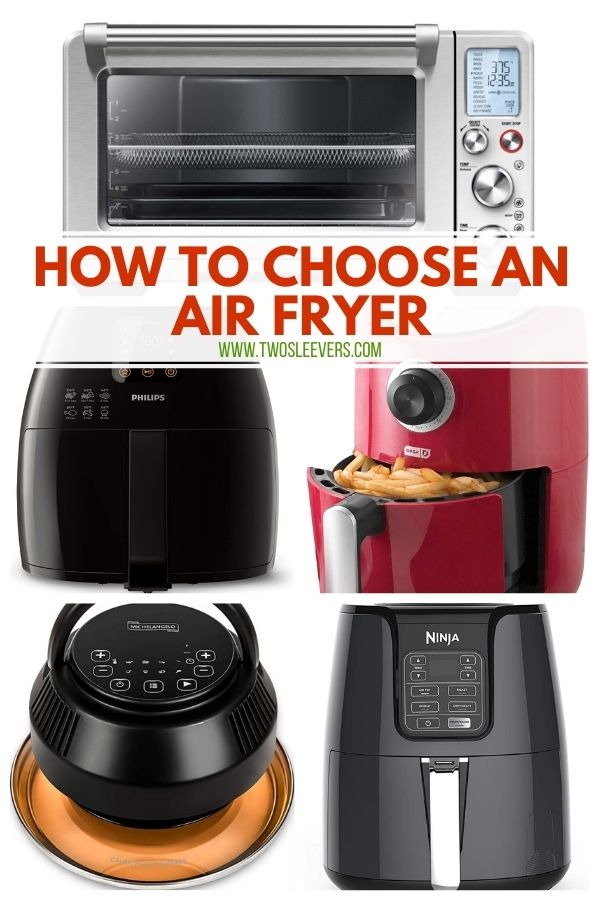
The main choice is between a basket-style air fryer and an air fryer toaster oven. Each design suits a different kitchen and cooking routine.
Basket air fryers
Basket air fryers have a compact body and a pull-out drawer or basket. They are often the simplest choice for:
- French fries and other frozen foods
- Chicken wings and tenders
- Roasted vegetables
- Small portions of fish
- Reheating pizza, bread, and leftovers
- Quick meals for one to four people
A basket model usually heats a small space quickly. Its raised basket also lets hot air move around the food. However, you may need to cook in batches if the basket is small.
Air fryer toaster ovens
Air fryer toaster ovens look more like small countertop ovens. They may include wire racks, baking trays, and a rotating basket. These models can be useful if you want to:
- Toast bread
- Bake small dishes
- Roast larger foods
- Cook on more than one rack
- Replace part of your countertop oven use
- Cook foods that do not fit well in a drawer basket
The trade-off is size. A toaster-oven air fryer takes more counter space and may need more time to preheat. Its larger cavity can also make cleaning more involved.
Dual-basket air fryers
Dual-basket models have two separate cooking zones. You can cook two foods at different temperatures or finish them at the same time.
This design can help when one person wants chicken and another wants vegetables. It also works well for families that often cook two small foods together. The main limits are a wider footprint, higher price, and smaller individual baskets on some models.
Manual and digital models
Manual air fryers use dials for time and temperature. Digital models use buttons, touch controls, or a display.
Manual controls are simple and may be easier to replace or understand. Digital controls can offer presets, a shake reminder, temperature readings, and more precise timing. Presets are starting points, not guarantees. Food size, brand, frozen state, and how full the basket is can all change the cooking time.
2. Choose the Right Air Fryer Size
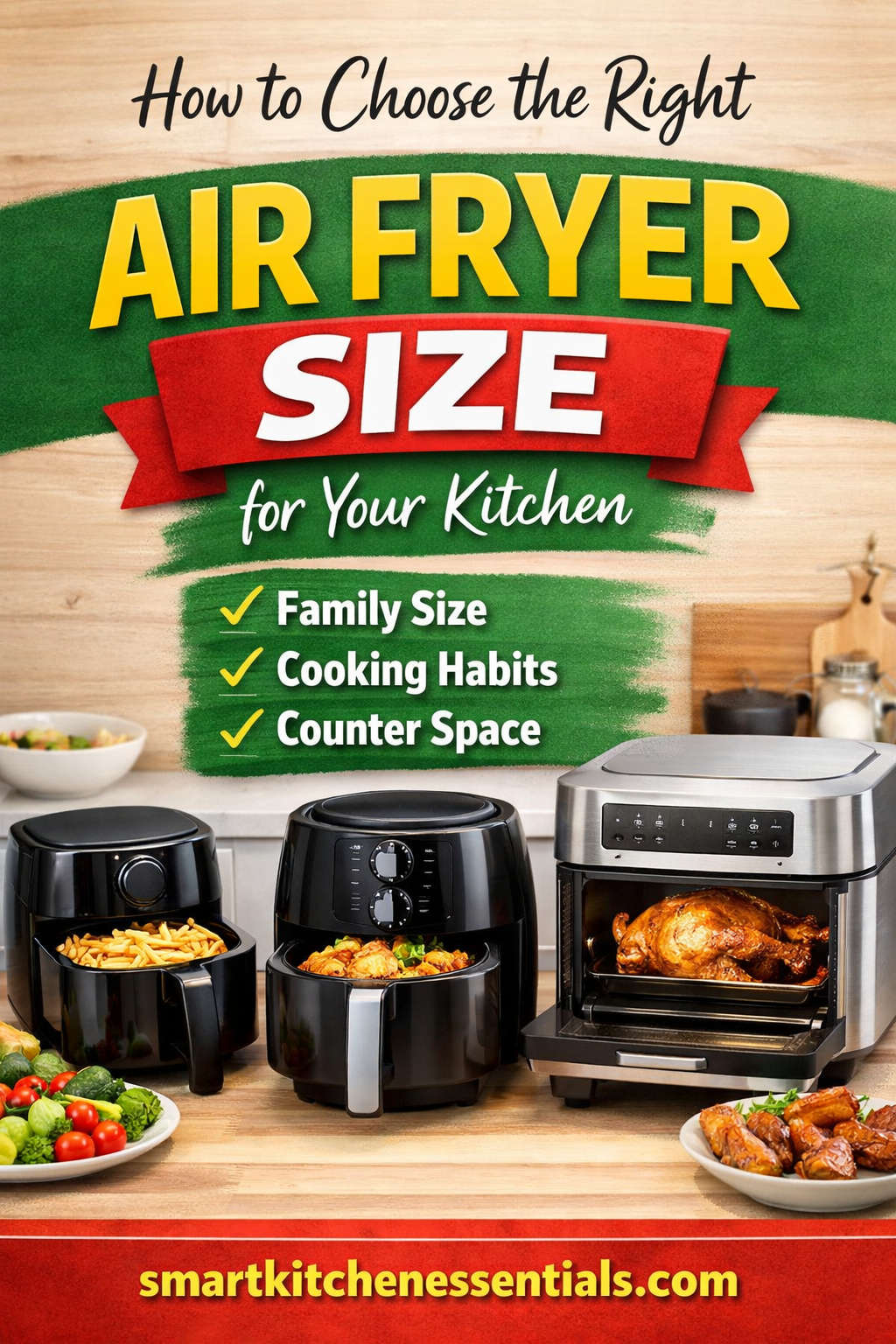
Capacity is one of the most important air fryer features, but the number printed on the box can be hard to compare. A stated quart size does not always tell you how much food will fit in one layer.
Use the following ranges as a starting point:
| Household or cooking need | Common size to consider | Best fit |
|---|---|---|
| One person or small snacks | 2 to 3 quarts | Small portions and reheating |
| One to two people | 3 to 5 quarts | Daily meals in modest portions |
| Two to four people | 5 to 7 quarts | Chicken, vegetables, and side dishes |
| Four or more people | 7 to 10 quarts or larger | Bigger portions or fewer batches |
| Family meals with two foods | Dual basket or large oven style | Separate cooking zones |
These are general planning ranges, not strict rules. A tall 6-quart basket may hold less food in a single layer than a wide 5-quart basket. For crisp results, food should usually have space around it. A packed basket can block airflow and lead to uneven browning.
Measure your counter before buying
Write down the available:
- Width
- Depth
- Height
- Space above the appliance
- Distance from the wall
- Location of the power outlet
Measure the air fryer with the basket or door fully open. Some drawer models need extra space in front. Some oven-style models release hot air from the back or top.
Always follow the clearance instructions in the manual. Do not place an air fryer under a cabinet if the manufacturer warns against it.
Think about storage
A large air fryer may cook more food, but it can become a daily obstacle if it has no permanent counter space. If you plan to store it in a cabinet, check its weight and shape first. Moving a heavy appliance after every use can make you use it less often.

3. Compare the Basket Shape and Cooking Area
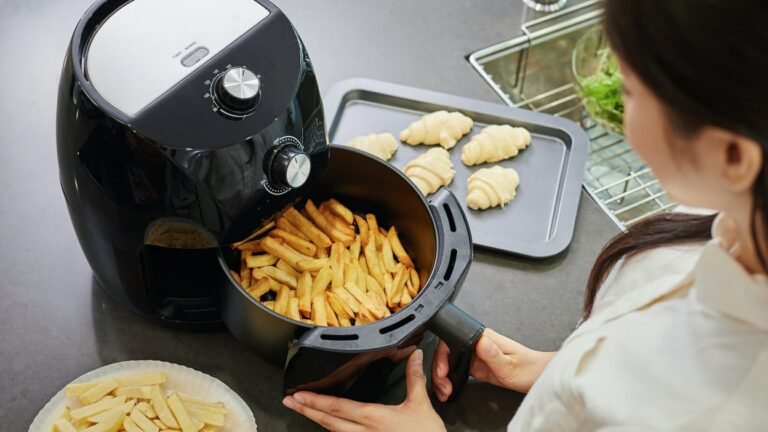
The cooking surface often matters more than the advertised capacity. A wide, shallow basket may be better for foods that need a single layer, such as wings, fries, sliced vegetables, and fish fillets.
A tall basket can hold more volume, but food at the bottom may receive more heat than food near the top. You may need to shake the basket or turn the food during cooking.
Look for these design details:
- A flat or mostly flat cooking surface
- A removable crisping plate
- Handles that stay cool during normal use
- A basket that slides in and out smoothly
- A viewing window, if you prefer to check food without opening the drawer
- A rack or divider, if the manufacturer supports one
- Clear minimum and maximum fill guidance
Avoid treating every removable tray as extra cooking space. A rack may change airflow, reduce headroom, or make cleaning harder. Use only accessories made for the appliance or listed as compatible by the manufacturer.
Single layer versus stacked food
Air fryers work best when hot air can reach the food. A single layer is often useful for:
- Frozen fries
- Chicken wings
- Bacon
- Fish fillets
- Toasted sandwiches
- Cut vegetables
You can stack some foods, especially small items that you shake during cooking. Large, wet, or delicate foods may cook poorly when crowded.
What “family size” really means
“Family size” is not a regulated capacity term. One brand may use it for a 6-quart basket, while another uses it for a large oven cavity. Check the interior dimensions and the food guide in the manual instead of relying on the label.
4. Check Temperature, Time, and Cooking Controls
Most air fryers offer controls for temperature and time. For general cooking, a range near 200°F to 400°F is useful. Some models go lower for drying or dehydrating. Others reach higher temperatures for strong browning.
A wider range is not automatically better. The key question is whether the controls are easy to set and repeat.
Useful control features include:
- A clear temperature display
- A timer that is easy to adjust
- Pause and resume controls
- Automatic shutoff
- A shake or turn reminder
- Separate controls for two baskets
- A preheat option
- A light that shows when the unit is heating
- A temperature probe, if you want more control over large foods
Presets are not cooking instructions
A preset may be based on a certain food weight, starting temperature, and basket load. It may not match your food or your preferred texture.
Use presets as a starting point. Check the food early, especially when:
- The food is thin or small
- You are cooking a new brand of frozen food
- The basket is more or less full than usual
- The food contains sugar or sauce
- You are cooking meat or poultry
For meat and poultry, use a food thermometer and follow safe internal temperature guidance from the USDA. Color and cooking time alone cannot confirm that food is safe.
Do you need preheat?
Some air fryers recommend preheating, while others do not. Follow the manual and the food package directions when available.
Preheating can help with browning and may make timing more consistent. Skipping it can save time for small foods. There is no single rule that works for every model and recipe.

5. Consider Wattage and Electrical Use
Most full-size U.S. air fryers use a standard 120-volt household outlet. Many draw about 1,000 to 2,000 watts, though the exact rating varies by model.
Wattage tells you how much electrical power the appliance can draw. It does not directly prove that one air fryer cooks better. A higher-wattage model may heat quickly, but results also depend on the cavity, fan, heating element, controls, and food load.
A simple electrical calculation
You can estimate current with this formula:
Amps = watts ÷ volts
For a hypothetical 1,500-watt air fryer on a 120-volt circuit:
1,500 ÷ 120 = 12.5 amps
This is only an estimate. The appliance label and manual are the controlling sources for installation and use instructions.
Avoid plugging high-wattage countertop appliances into the same outlet at the same time if the circuit may overload. Do not use an extension cord unless the manufacturer specifically permits it and the cord is rated for the appliance. The U.S. Consumer Product Safety Commission provides general appliance and electrical safety information, while the product manual gives model-specific instructions.
Do not use an air fryer if the cord, plug, basket, or housing is damaged.
6. Look for Easy Cleaning and Maintenance
An air fryer that is hard to clean may stay in the cabinet. Simple cleaning features can matter more than extra presets.
Before buying, check whether the model has:
- A removable basket
- A removable crisping plate
- Dishwasher-safe parts
- A smooth interior
- A heating element that you can inspect
- Few narrow gaps where grease can collect
- A filter or fan area described in the manual
“Dishwasher safe” usually applies only to certain removable parts. It does not mean the whole appliance can be placed in water or a dishwasher.
Basic cleaning routine
- Unplug the air fryer and let it cool.
- Remove the basket, tray, or rack.
- Wipe grease and crumbs from the interior.
- Wash removable parts as directed.
- Use a soft cloth on the heating area.
- Dry all parts before putting them back.
- Check for grease near the heating element before the next use.
Do not use metal tools or harsh cleaners unless the manual allows them. They may damage a nonstick surface. Do not pour water into the main housing.
If the air fryer begins to smoke, turn it off and unplug it when safe. Small amounts of smoke can come from excess grease or residue, but repeated smoke needs attention. Let the unit cool, then inspect and clean it. Stop using it if you see electrical damage, unusual sparking, melting, or smoke that does not come from food residue.

7. Review Safety Features and Certifications
Safety features can reduce common risks, but they do not make an appliance risk-free.
Useful features may include:
- Automatic shutoff
- Overheat protection
- A cool-touch handle
- A stable base
- A basket interlock that prevents operation when parts are not in place
- A cord that stays away from hot surfaces
- A clear maximum-fill line
Look for a recognized testing mark, such as UL Listed or ETL Listed, on the product, packaging, or documentation. Confirm that the mark applies to the appliance and not only to an unrelated accessory. A certification mark indicates that the product was evaluated to a relevant safety standard by the listed organization. It does not guarantee cooking performance or eliminate the need to follow the manual.
Safe placement
Place the air fryer on a stable, heat-resistant surface. Keep it away from:
- Water
- Paper towels and curtains
- The edge of the counter
- Hot stovetops
- Areas with blocked vents
- Cabinets that the manual says to avoid
Do not cover the air fryer while it is operating. Hot steam and air can escape during cooking, especially when you pull out the basket.
Avoid unsafe shortcuts
Do not:
- Fill the basket beyond the maximum line
- Put loose parchment paper in the basket without food weighing it down
- Use the appliance with a damaged cord
- Operate it near flammable items
- Leave it running when the manual says not to
- Pour oil into the drawer as if it were a deep fryer
- Touch the basket or food immediately after cooking without protection
Parchment liners should be made for the intended temperature and used as directed. Some products require holes for airflow. Never allow a liner to touch the heating element.
8. Decide Which Features Are Worth Paying For
Extra features are useful when they solve a real problem. They are less useful when they only add buttons.
Features that may be worth it
- A wider basket for single-layer cooking
- Two independent baskets
- A clear viewing window
- Dishwasher-safe removable parts
- A strong, easy-to-read display
- A quiet mode, if noise bothers you
- A temperature probe for larger foods
- A repairable design or available replacement basket
- A useful warranty from a known company
Features that may not matter to you
- Dozens of presets
- App control
- Voice control
- Decorative lighting
- A recipe subscription
- A very high maximum temperature you will rarely use
- Accessories that take up more storage than the appliance
Wi-Fi can be convenient, but it also creates another setup requirement. Check whether the app needs a specific phone operating system, a home Wi-Fi band, an account, or ongoing service. Do not pay more for connected features if you only want simple cooking.
9. Set a Realistic Air Fryer Budget
Air fryer prices vary by size, design, brand, and features. Instead of choosing only by price, compare the total value:
- Purchase cost
- Counter space
- Replacement basket or tray cost
- Warranty length and terms
- Ease of getting support
- Cleaning time
- Electricity use
- Whether it replaces another appliance
- Whether you will need a second unit for larger meals
A low-cost air fryer may be a good fit for occasional snacks. A more expensive model may make sense if you use it several times each week, need two cooking zones, or want an oven-style design.
Do not assume that the highest price means the best cooking results. Read the manual before buying when possible. The manual often reveals the real capacity, cleaning rules, temperature range, and accessory limits.
10. Use This Air Fryer Buying Checklist
Before you buy, answer these questions:
- How many people will I usually cook for?
- What foods will I make most often?
- Can the basket hold those foods in a useful layer?
- Will the appliance fit on my counter with the basket or door open?
- Can I lift and store it safely?
- Are the basket and tray easy to remove?
- Are replacement parts available?
- Does the model have a recognized safety certification mark?
- Does the wattage suit the outlet and circuit I plan to use?
- Are the controls clear enough for daily use?
- Does the warranty cover the parts most likely to wear?
- Do I need a basket model, oven model, or dual-basket model?
If you cook mainly frozen snacks and small meals, choose a simple basket model that fits your space. If you want to replace some toaster-oven tasks, choose an oven-style model. If you often cook two foods at once, consider dual baskets.

Common Air Fryer Buying Mistakes
Buying a basket that is too small
A small model may look affordable, but several batches can take longer than expected. Think about the food you cook most often, not only the number of people in your home.
Choosing by quart size alone
The shape of the basket affects cooking space. Compare interior dimensions and cooking guides when available.
Ignoring counter clearance
An appliance may fit when closed but fail when the drawer opens or the oven door swings down. Measure the operating space.
Paying for presets instead of usable design
A simple control panel and easy cleanup may improve daily use more than 20 extra programs.
Overfilling the basket
Overcrowding can slow cooking and reduce browning. Cook in batches when needed.
Assuming “dishwasher safe” means maintenance-free
Grease can still collect around the heating element and vents. Clean the main housing by hand according to the manual.
Using cooking time as proof of food safety
For meat and poultry, check internal temperature with a reliable food thermometer. Do not depend only on the preset, appearance, or timer.
Buying an unverified appliance from an unclear seller
Check the seller, model number, warranty, return policy, and safety markings. Keep the receipt and product documentation.
Frequently Asked Questions
What size air fryer should I buy for two people?
A 3- to 5-quart basket can work well for two people, depending on the foods and portions you cook. Choose a wider basket if you often make wings, fries, or vegetables that need room to spread.
Is a basket air fryer better than an air fryer toaster oven?
Neither design is best for every kitchen. A basket model is usually compact and quick for small meals. A toaster-oven model offers more room and more functions but takes up more space and may need more cleaning.
Are air fryers safe to use on a countertop?
They can be used on a stable, heat-resistant countertop when the manual’s clearance and ventilation instructions are followed. Keep the appliance away from water, flammable objects, and blocked vents.
Can I use aluminum foil or parchment paper in an air fryer?
Only use them when the manual and the material instructions allow it. Keep paper weighed down by food, avoid blocking airflow, and keep all liners away from the heating element. Do not let foil touch the heating element.
Does a higher-wattage air fryer cook better?
Not necessarily. Higher wattage may support faster heating, but cooking results also depend on basket design, airflow, temperature control, and how much food you add.
How long should an air fryer last?
Lifespan depends on use, cleaning, heat exposure, and the quality of the parts. Before buying, check the warranty and whether the manufacturer sells replacement baskets, trays, or other wear parts.
Final Recommendation
To choose an air fryer, match the design to your routine: select a compact basket model for quick small meals, a wide or dual-basket model for larger or mixed meals, and an air fryer toaster oven for broader countertop cooking.
Then verify the details that affect daily use: usable cooking area, counter clearance, controls, cleaning, wattage, safety certification, warranty, and replacement parts. The right air fryer is not the one with the longest feature list. It is the one that fits your kitchen, cooks your usual foods well, and is easy to use safely.
Before placing an order, measure your space and read the current manual for the exact model. That final check can prevent the most common buying mistake: choosing an appliance that looks right on paper but does not fit your counter, outlet, or cooking habits.

One Comment