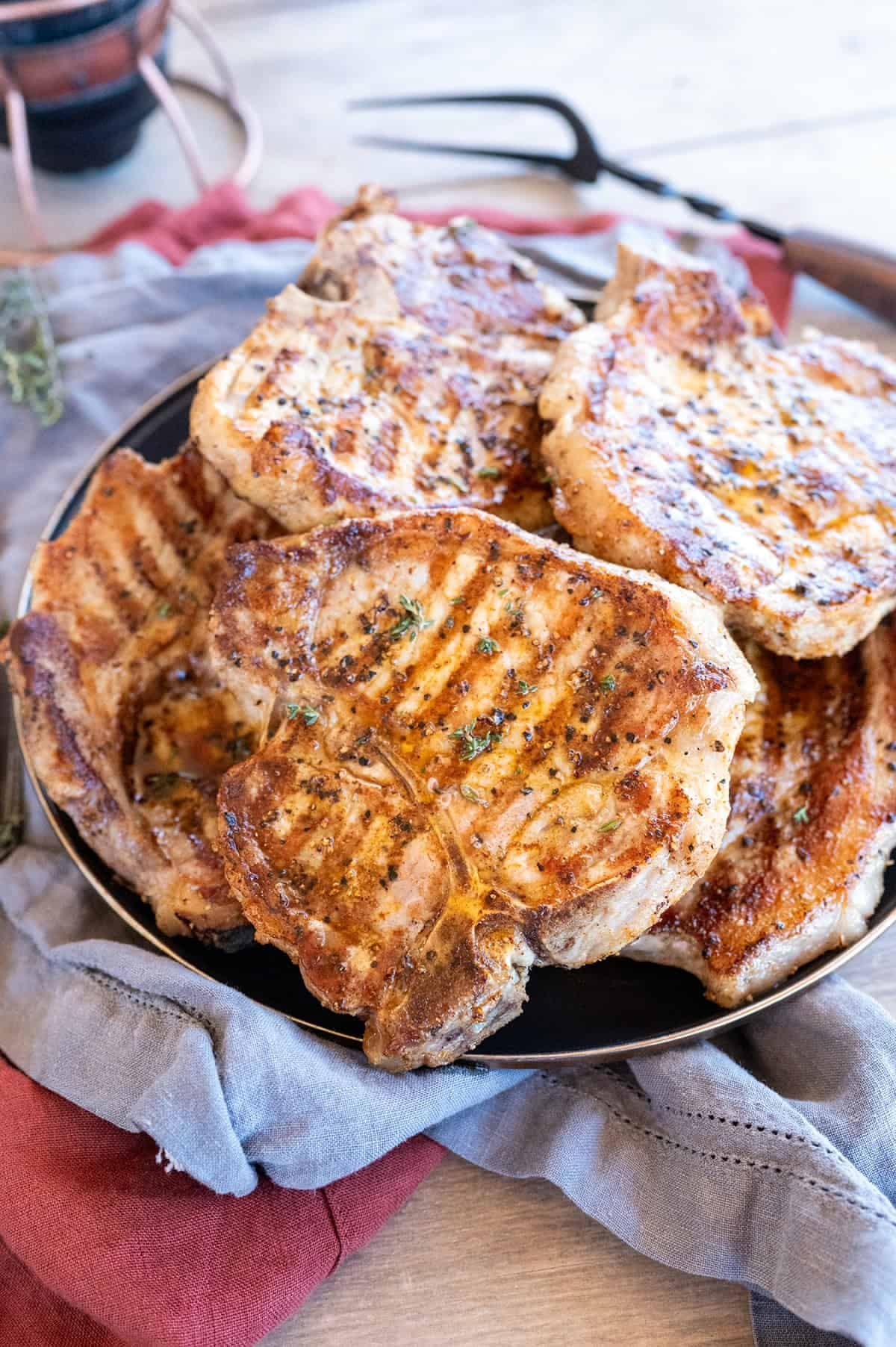
Ninja Foodi Pork Chops: Easy Juicy Recipe In Minutes
Quick answer: Yes — you can make juicy, safe pork chops in a Ninja Foodi by targeting an internal temp of 145°F (63°C) with a 3-minute rest and using Air Crisp or the TenderCrisp pressure+crisp workflow for a crunchy outside.
Introduction (USA): This guide uses U.S. food-safety rules and common Ninja Foodi features sold in the U.S. market. The USDA recommends cooking whole pork cuts to 145°F with a 3-minute rest. Ninja Foodi multicookers sold in the U.S. commonly include Air Crisp, Pressure (or Pressure Cook), and Sear/Sauté settings. Follow device manuals for model-specific limits and safety steps.

Essential context: what “Ninja Foodi pork chops” means and the safety baseline
Answer: Use the Foodi’s crisping or pressure + crisp options while verifying doneness with a thermometer.
- Device basics: Most Ninja Foodi models combine pressure cooking and air-frying functions. The common approaches for pork chops are Air Crisp (air-fry) or TenderCrisp (pressure then crisp).
- Safety baseline (U.S.): USDA requires pork chops (whole-muscle cuts) reach 145°F and then rest 3 minutes. An instant-read thermometer is the single best safety and quality tool.
- Why method matters: High-heat crisping creates a brown crust quickly. Pressure can speed cook and tenderize, but it removes surface crispness until you finish with an air-crisp step.
Note on sources and limits: I wrote this guide using established USDA cooking temps and general Ninja Foodi feature knowledge up to mid-2024. I couldn’t access live web pages while drafting, so I recommend checking your Foodi manual for model-specific guidance and maximum fill, liquid, and pressure specs.

How to cook great pork chops in a Ninja Foodi (prerequisites, step-by-step, signs of success, failures)
Answer: Prepare, season, and either Air Crisp directly or pressure-cook then Air Crisp; always use a thermometer to confirm 145°F and rest 3 minutes.
Prerequisites
- Ninja Foodi with Air Crisp or TenderCrisp function.
- Instant-read thermometer.
- Tongs, paper towels, small bowl for brine (optional).
- Pork chops (boneless or bone-in), room temperature for 15–20 minutes.
- Cooking oil with high smoke point (canola, vegetable, or light olive oil).
Basic workflow (Air Crisp — fast, crisp exterior)
- Pat chops dry and season. Optional: quick brine (1 cup water + 1 tbsp salt per 2–3 chops) for 15–30 minutes for juicier results; rinse and pat dry.
- Preheat Foodi Air Crisp to 400°F for 3–5 minutes.
- Lightly oil chops. Place in basket leaving space between pieces.
- Air Crisp at 400°F. Flip halfway. See the decision table below for time estimates by thickness.
- Check internal temp with an instant-read thermometer. Pull at 145°F and rest 3 minutes.
TenderCrisp (pressure + crisp — tender inside, crispy outside)
- Season and sear: Use Sear/Sauté on high with 1–2 tsp oil. Sear 1–2 minutes per side for color.
- Add 1/4 to 1/2 cup liquid (broth or water) to the pot — follow your model manual minimum liquid rules.
- Pressure cook on High. Time depends on thickness; estimate short times (see variables below), then quick-release.
- After pressure release, pat dry if needed, then Air Crisp at 400°F for 4–6 minutes to brown and crisp. Check temp and rest.
Signs of success
– Instant-read thermometer reads 145°F in the thickest part of the chop.
- Juices are clear to slightly pink; surface is browned and crisped.
- Chop yields slightly under the fork but is not stringy or dry.
If it fails (undercooked, overcooked, or rubbery)
- Undercooked: Return to Air Crisp at 350–400°F in 1–2 minute increments until 145°F.
- Overcooked/dry: Reduce future cooking time; try brining and lower finish temp. Use a thinner sear and shorter crisp.
- Rubbery/chewy after pressure: Likely overcooked or used too little liquid; reduce pressure time next time.
Safety note: Never cut into a chop to judge doneness. Use the thermometer and rest time.

Variables, examples, and a decision table (thickness, bone, method, and estimated times)
Answer: Choose method by chop thickness and desired texture; use the thermometer as the final check.
Key variables
- Thickness (most important): time scales with thickness.
- Bone-in vs boneless: bone-in needs modestly longer cook.
- Starting temperature: fridge-cold adds time.
- Brine or marinade: brine increases juiciness and can reduce perceived dryness.
- Appliance model and basket load: crowded baskets need more time.
Estimated Air Crisp times at 400°F (estimates; verify with thermometer)
| Thickness | Bone/Boneless | Air Crisp time (flip halfway) |
|---|---|---|
| 1/2" (thin) | Boneless | 6–8 min |
| 1" (standard) | Boneless | 8–10 min |
| 1" | Bone-in | 10–12 min |
| 1.25–1.5" | Boneless | 12–15 min |
| >1.5" | Bone-in or boneless | 14–18+ min (monitor with thermometer) |
TenderCrisp example (illustrative workflow)
- Sear: 1–2 min per side on Sear/Sauté.
- Pressure cook: short interval (3–6 minutes typical for 1" chops) — this is model-dependent. Quick-release, then Air Crisp 4–6 minutes.
Why a thermometer matters: Time ranges are only estimates. The final target is 145°F internal temp, followed by 3 minutes rest. That rule guarantees safety and the best texture for U.S. cooks.

Common mistakes, exceptions, limitations, and safety boundaries
Answer: The most common errors are skipping the thermometer, overcrowding the basket, and ignoring rest time.
Common mistakes and fixes
- Mistake: Relying only on time. Fix: Use an instant-read thermometer every time.
- Mistake: Overcrowding the basket. Fix: Cook in batches to allow air flow and proper crisping.
- Mistake: Skipping rest. Fix: Rest chops 3 minutes to let juices redistribute.
- Mistake: Using very high sugar-heavy marinades at high heat without monitoring. Fix: Watch for burn and lower finish temp or shorten crisp time.
Model and liquid limits (limitations)
- Pressure cooking requires a minimum liquid amount. Check your Foodi manual so you do not trigger a no-pressure fault or damage the device.
- Some Foodi lids have max-fill markers. Never overfill.
- Crisping works best with a light oil coating and low-sugar rubs. Sauces or heavy glazes should be added after crisping or after the rest.
Food safety boundaries
- Follow USDA guidance: 145°F and 3-minute rest for whole-muscle pork. Ground pork requires higher temp (160°F) — do not treat whole chops like ground pork.
- If you are cooking for people with weakened immune systems (elderly, pregnant, immunocompromised), follow local public health advice and consider higher internal temps per their guidance.

Follow-up questions and next actions
Answer: Try one clear next step: pick a method and run one controlled test using an instant-read thermometer.
Suggested next actions (reader stage map)
- If you own a Foodi and want quick crisp chops: try the Air Crisp method with 1" boneless chops, 400°F, 8–10 minutes, flipping at half time. Use a thermometer and rest 3 minutes.
- If you want extra tenderness: use TenderCrisp (sear → pressure → crisp). Check your manual for minimum liquid and pressure times.
- If you frequently overcook: brine chops for 15–30 minutes and reduce finish time by 1–2 minutes, relying on the thermometer.
- If you cook for others with special needs: follow USDA guidance and local health recommendations for internal temps.

FAQs (useful unresolved reader questions)
Q: Can I cook frozen pork chops in a Ninja Foodi?
A: You can, but thawing first gives better texture and even cooking. If using frozen, use TenderCrisp with added pressure time and then Air Crisp. Always confirm 145°F internal temp.
Q: Should I brine pork chops for the Foodi?
A: A short brine (15–30 minutes) gives a noticeable juiciness boost for lean chops. Rinse and dry before cooking to get a good sear.
Q: Can I stack chops in the basket?
A: No. Stacking prevents hot air flow. Cook in a single layer and do batches if needed.
Q: What oil is best for the Foodi?
A: Use oils with a high smoke point: canola, vegetable, avocado, or light olive oil. Use sparingly for Air Crisp.
Q: How do I reheat leftover chops in the Foodi?
A: Use Air Crisp at 350°F for 3–5 minutes to revive crust while keeping the interior moist. Check temp reaches at least 165°F if reheating for food-safety policies in some settings.
Next action: Pick a method, weigh one chop, set your instant-read thermometer, and run one test cook. Record the chop thickness and time; adjust next cook using the thermometer as the guide.
Key takeaways
- Target 145°F internal temp and rest 3 minutes (USDA).
- Air Crisp at 400°F gives quick browning; TenderCrisp adds pressure tenderizing then crisping.
- Use an instant-read thermometer and avoid overcrowding.
Final note on evidence: This article uses USDA temperature guidance and broadly available Ninja Foodi feature descriptions known through 2024. I could not access live web pages while writing. For model-specific numbers, safety warnings, and liquid minimums, check your Foodi owner’s manual before pressure cooking.