
How To Cook Bacon In Air Fryer: Crispy, Easy Guide
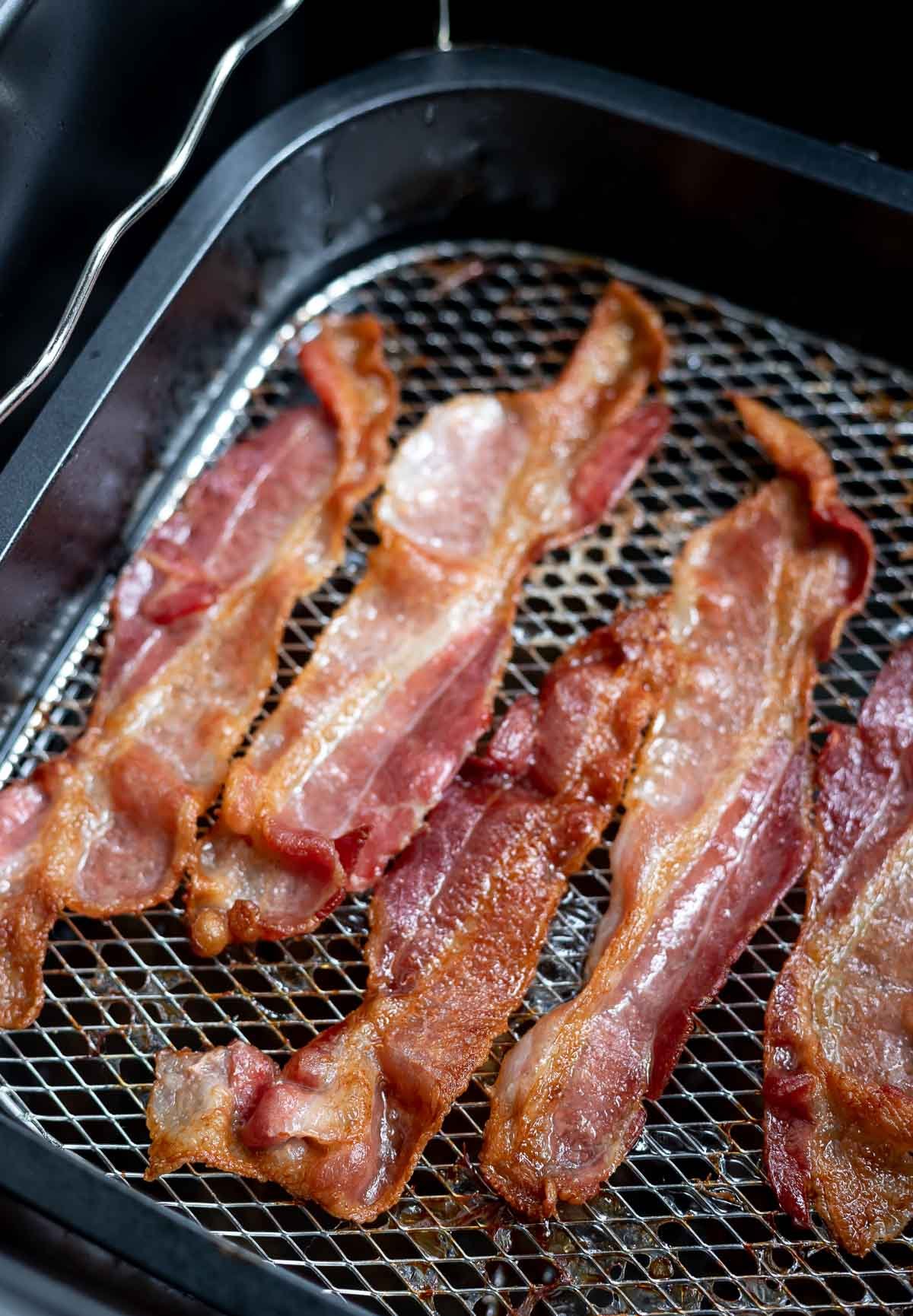
Air fryer bacon is one of the easiest ways to cook the classic American breakfast staple. Arrange regular-cut or thick-cut bacon in a single layer, cook it at 350°F, and begin checking it after 8 minutes. Most bacon finishes in about 8 to 12 minutes, although thickness, brand, air fryer size, and preferred crispness affect the timing.
The air fryer circulates hot air around the bacon, helping the strips cook evenly while the rendered fat drains below the basket. The result is crisp bacon with less stovetop splatter and minimal hands-on work.

Key Takeaways
- Cook bacon in an air fryer at 350°F.
- Use a single layer and avoid overlapping strips.
- Regular-cut bacon usually takes 8 to 12 minutes.
- Thick-cut bacon commonly takes 10 to 15 minutes.
- Check early because air fryer heating performance varies.
- Drain cooked bacon on paper towels before serving.
- Let the rendered grease cool before disposing of it or saving it.
What You Need
You only need a few items to make air fryer bacon:
- Bacon
- An air fryer
- Tongs or a fork
- A plate lined with paper towels
- Heat-resistant gloves or a dry kitchen towel, if needed
Most standard American bacon works well, including regular-cut, thick-cut, smoked, peppered, and uncured bacon. “Uncured” bacon is still processed bacon; the label generally refers to the curing ingredients used rather than meaning the pork is completely untreated.
You usually do not need cooking oil. Bacon contains enough fat to cook and brown on its own.
How to Cook Bacon in an Air Fryer
1. Check the air fryer basket
Make sure the basket and lower pan are clean and dry. Remove excess grease from a previous use, since old fat can smoke when reheated.
If your air fryer manufacturer recommends preheating, preheat it to 350°F. Preheating is not essential for every model, but it can make cooking time more predictable.
2. Arrange the bacon
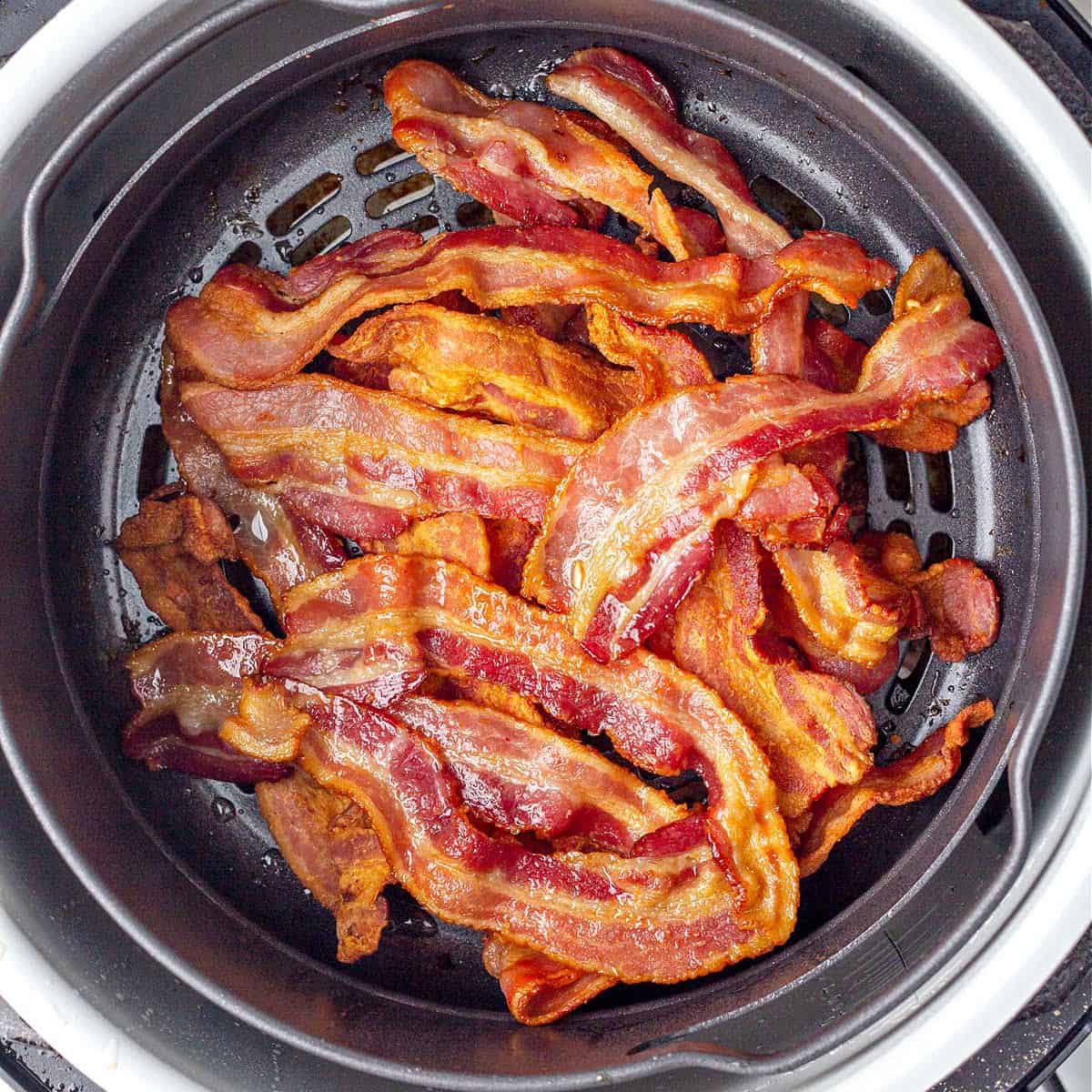
Place the bacon strips in the air fryer basket in a single layer. The strips may touch slightly, but avoid stacking or heavily overlapping them.
You can cut long strips in half if they do not fit comfortably. Cutting the bacon does not change the cooking method; it simply makes arranging the pieces easier.
3. Cook at 350°F
Cook regular bacon for about 8 to 12 minutes at 350°F. Begin checking around 8 minutes because some air fryers brown food faster than others.
For thick-cut bacon, plan on approximately 10 to 15 minutes. Turn or rearrange the strips halfway through if your air fryer has uneven heating or if one side is browning faster than the other.
4. Check the texture
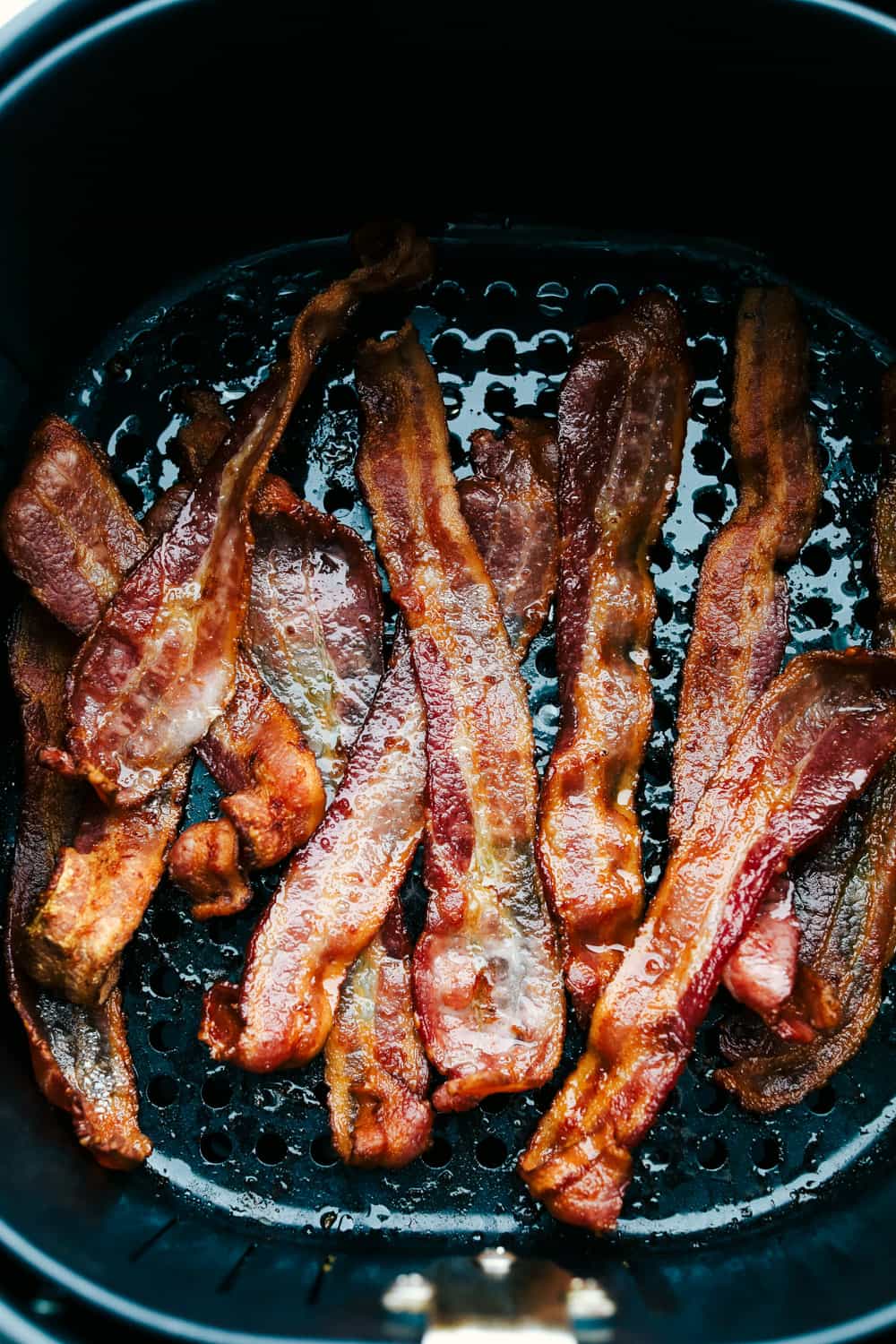
Bacon continues to firm slightly as it cools. Remove it when it looks a little less crisp than your final target.
Use tongs to transfer the bacon to a paper towel-lined plate. Allow it to drain for 1 to 2 minutes before serving.
5. Cool and handle the grease safely
Let the grease in the lower pan cool before moving or disposing of it. Do not pour hot bacon fat into a plastic trash can, down the drain, or into a garbage disposal.
For disposal, allow the grease to solidify and place it in the trash, or pour cooled grease into a heat-resistant container for later use. Always follow local waste guidance and your air fryer’s cleaning instructions.
Air Fryer Bacon Cooking Times
Cooking time depends primarily on bacon thickness and how crisp you like it. The following ranges are practical starting points, not guarantees for every air fryer.
| Bacon type | Temperature | Approximate time | Best approach |
|---|---|---|---|
| Regular-cut bacon | 350°F | 8–12 minutes | Check at 8 minutes |
| Thick-cut bacon | 350°F | 10–15 minutes | Turn or rearrange halfway |
| Extra-thick bacon | 350°F | 12–18 minutes | Check frequently near the end |
| Bacon pieces or short strips | 350°F | 6–10 minutes | Watch closely to prevent burning |
| Frozen bacon | 350°F | About 12–18 minutes | Separate pieces as they loosen |
These times assume a reasonably full but uncrowded basket. A small batch may cook faster because hot air can circulate more freely. A crowded basket may take longer and produce softer bacon.
If your air fryer manual specifies a different temperature or warns against certain foods, follow the manual. Air fryers vary in wattage, basket design, heating element position, and airflow.
Should You Preheat an Air Fryer for Bacon?
Preheating is optional for many air fryers, but it can shorten and standardize the cooking process. Starting bacon in a cold air fryer may add a few minutes, particularly in a large basket-style model.
If you skip preheating:
- Put the bacon in the basket.
- Set the air fryer to 350°F.
- Begin checking a few minutes later than you would with a preheated appliance.
- Adjust the next batch based on the result.
Preheating does not automatically make bacon crispier. The main factors are bacon thickness, spacing, cooking time, and how much moisture remains in the meat.
Do You Need to Flip Bacon in an Air Fryer?
You do not always need to flip bacon. Hot air reaches both sides, and the bacon fat helps the strips cook evenly.
Flipping or rearranging is useful when:
- The air fryer browns one side faster than the other.
- The basket is nearly full.
- The strips curl and leave part of the surface away from the airflow.
- You are cooking thick-cut bacon.
- Some strips are closer to the heating element.
For a small batch, leave the bacon undisturbed and check it near the end. Moving it too often can make handling hot grease more difficult without improving the result.
How to Cook Thick-Cut Bacon
Thick-cut bacon needs more time than regular bacon because each strip contains more meat and moisture. Cook it at 350°F for approximately 10 to 15 minutes, checking after 10 minutes.
For better results:
- Leave space between the strips.
- Turn the bacon halfway through if browning is uneven.
- Add time in 1- to 2-minute increments.
- Remove it before it reaches your exact preferred crispness because it firms as it cools.
If the outside looks browned but the center remains soft, continue cooking in short increments. Avoid raising the temperature sharply to speed up the process; the edges may burn before the thicker center cooks.
How to Cook Frozen Bacon in an Air Fryer
Frozen bacon can be cooked in an air fryer, but the strips usually need to be separated after the first few minutes.
- Place the frozen bacon in the basket.
- Cook at 350°F for about 4 to 6 minutes.
- Remove the basket carefully and separate the softened strips with tongs.
- Return the basket and continue cooking for about 8 to 12 minutes.
- Check frequently near the end.
Frozen bacon may release more moisture at the beginning, so it can take longer to crisp. Do not force frozen strips apart with a sharp knife while they are stuck together; wait until the fat and surface ice soften.

How Much Bacon Fits in an Air Fryer?
The correct amount depends on the basket’s surface area rather than just its advertised capacity. Arrange the bacon so hot air can move around most of each strip.
As a general guide:
- A small basket may hold 2 to 4 regular strips.
- A medium basket may hold 4 to 6 strips.
- A larger basket may hold 6 or more strips if the pieces fit in a single layer.
Do not pack bacon into multiple layers unless you are willing to pause and rearrange it. Stacked bacon can cook unevenly, with crisp edges and soft sections trapped between strips.
For a large breakfast, cook in batches. The first batch may finish slightly faster if the air fryer is already hot.
How to Reduce Smoke When Cooking Bacon
Bacon grease can smoke when it contacts a very hot surface or heating element. To reduce smoke:
- Cook bacon at 350°F rather than an unnecessarily high temperature.
- Remove old grease from the lower pan before cooking.
- Avoid filling the basket beyond its recommended capacity.
- Use bacon with a moderate amount of visible fat if smoke is a recurring problem.
- Stop cooking if the appliance produces heavy smoke or a burning odor.
- Keep the air fryer away from cabinets and under a properly functioning kitchen ventilation system.
Some cooks add a small amount of water to the lower pan to reduce smoking, but this is not suitable for every air fryer. Water can affect airflow, and some manufacturers specifically prohibit adding liquids to particular components. Consult your appliance manual before trying this method.
Never leave an air fryer unattended if it is producing excessive smoke. Turn it off, unplug it if safe to do so, and allow it to cool before investigating.
How to Clean an Air Fryer After Cooking Bacon
Cleaning the air fryer after bacon prevents old grease from smoking during future cooking.
- Unplug the air fryer and let it cool completely.
- Remove the basket and lower pan.
- Pour or wipe out cooled grease.
- Wash removable parts according to the manufacturer’s instructions.
- Use a soft sponge or cloth to remove grease from the basket.
- Wipe the interior with a damp cloth.
- Clean the heating element only as directed in the manual.
- Dry all parts completely before reassembling.
Avoid abrasive scouring pads if they can damage a nonstick coating. Do not submerge the main air fryer unit in water.

Common Air Fryer Bacon Problems
Bacon is not crisp
The basket may be overcrowded, the strips may be too thick for the cooking time, or the air fryer may need additional time. Continue cooking in 1- to 2-minute increments.
For future batches, use fewer strips and leave more space between them.
Bacon is burnt at the edges
The temperature may be too high, the strips may be too close to the heating element, or the cooking time may be excessive. Lower the temperature to 325°F to 340°F or begin checking earlier.
Uneven strip thickness can also cause the narrow ends to finish before the center.
Bacon is chewy instead of crisp
Chewy bacon is not necessarily undercooked; some people prefer that texture. If you want it crisp, continue cooking briefly and drain it on paper towels.
Bacon can also soften after sitting in its own grease. Removing it promptly from the basket helps preserve its texture.
The air fryer is smoking
Turn off the appliance if the smoke is heavy. Common causes include excess grease in the lower pan, old residue, cooking at too high a temperature, or a piece of bacon contacting the heating element.
Clean the appliance after it cools and check the manual before using it again.
Bacon sticks to the basket
Let the bacon cook for several minutes before trying to move it. If it still sticks, use silicone-tipped tongs or a suitable spatula rather than scraping aggressively.
Do not add nonstick spray unless the manufacturer allows it. Aerosol cooking sprays can damage some air fryer coatings.
Food Safety and Storage
Bacon should be cooked until it reaches the texture and doneness you prefer, with no visibly raw sections. The USDA advises cooking pork to a safe internal temperature of 145°F with a 3-minute rest, although measuring a thin bacon strip accurately with a food thermometer can be difficult. For processed bacon, visual doneness and package directions are commonly used in home cooking, but temperature remains the most reliable safety measure when it can be measured properly.
Keep raw bacon refrigerated until cooking. Wash hands, utensils, and surfaces that contact raw bacon before using them for ready-to-eat foods.
Store leftover cooked bacon in a covered container in the refrigerator and use it within the time recommended by USDA food-storage guidance. Reheat it until hot, using a microwave, skillet, or air fryer. Discard bacon that has an off odor, unusual appearance, or has been left at room temperature for an unsafe period.
Ways to Use Air Fryer Bacon
Cooked air fryer bacon works well in:
- Breakfast sandwiches
- Bacon, lettuce, and tomato sandwiches
- Burgers
- Salads
- Baked potatoes
- Macaroni and cheese
- Pancake or waffle toppings
- Deviled eggs
- Breakfast burritos
- Chopped toppings for soups
For recipes that call for crumbled bacon, cook the strips until crisp enough to break apart easily. For sandwiches, slightly chewy bacon may be easier to bite through without pulling out of the bread.
Frequently Asked Questions
Can you put raw bacon directly in an air fryer?
Yes. Place raw bacon directly in the air fryer basket in a single layer. You generally do not need oil, parchment, or foil. Follow the air fryer manufacturer’s instructions regarding liners and accessories.
What is the best temperature for air fryer bacon?
350°F is a practical starting temperature because it cooks and browns bacon without requiring the very high heat that can burn the edges or increase smoking. Adjust the time rather than using excessive heat to compensate for thick bacon.
Is air fryer bacon healthier than pan-fried bacon?
Air frying may allow rendered fat to drain away from the bacon, but it does not turn bacon into a low-fat or low-sodium food. The nutritional value depends on the bacon brand, serving size, and how much fat remains on the cooked strips.
Can you use foil or parchment paper under bacon?
Only use foil or parchment if the air fryer manufacturer permits it and the material is designed for cooking. A liner that is loose or placed in the basket without food on top can move into the heating element. Liners can also restrict airflow and change cooking results.
Can you cook bacon and eggs together in an air fryer?
Sometimes, but it depends on the air fryer and the cookware approved for that model. Bacon releases grease and may cook at a different rate from eggs. A small, heat-safe pan or ramekin may be required for the eggs, and it must not block airflow or exceed the appliance’s instructions.
Final Recommendation
For dependable air fryer bacon, use 350°F, arrange the strips in a single layer, and start checking regular-cut bacon after 8 minutes. Add time in short increments until it reaches your preferred texture. Use less bacon per batch if the strips cook unevenly, and clean the cooled grease from the air fryer after cooking.
The simplest next step is to cook a small batch first. Record the time that produces the texture you like, then use that setting as your starting point for future batches.



One Comment