
Is Convection Oven Same As Air Fryer: Key Differences
A convection oven and an air fryer use the same basic idea: a fan moves hot air around food. But they are not exactly the same appliance. In most U.S. kitchens, an air fryer is a small, powerful convection oven with a compact cooking chamber and a perforated basket.
That design helps food cook quickly and brown well. A full-size convection oven offers more space and flexibility, but it may need more time to crisp a small portion. The best choice depends on what you cook, how much food you make, and how much counter space you have.
What Is the Difference Between a Convection Oven and an Air Fryer?
The main difference is size, airflow, and cooking setup. A convection oven is a full oven with a fan. An air fryer is a smaller countertop appliance designed to move hot air close to the food.
Both appliances can:
- Bake
- Roast
- Reheat
- Brown food
- Cook frozen foods
- Reduce the need for deep-frying oil
The term air frying usually describes a cooking method rather than a completely different form of heat. The food cooks through hot, moving air. The air fryer’s small chamber and perforated basket make that process faster and more direct.
How a convection oven works
A convection oven uses heating elements and a fan. The fan moves hot air around the oven cavity. This can reduce hot and cold spots and help food cook more evenly than in a standard oven.
A convection oven may have:
- A large cooking cavity
- One or more racks
- A rear fan
- A convection bake or convection roast setting
- An air-fry setting on some newer models
The larger cavity gives you room to cook several servings or a full meal. However, food may sit farther from the heating element and fan than it would in an air fryer.
How an air fryer works
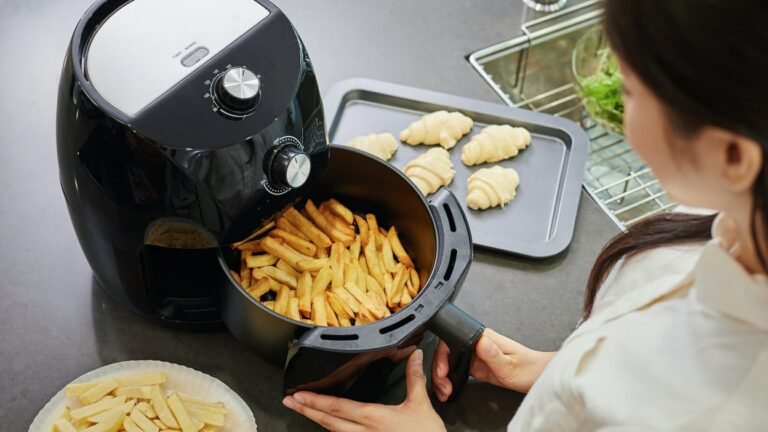
An air fryer uses a heating element and a fan in a compact chamber. Food usually sits in a basket or tray with holes. Those holes let hot air reach more of the food’s surface.
This design can help create a crisp outside on foods such as:
- French fries
- Chicken wings
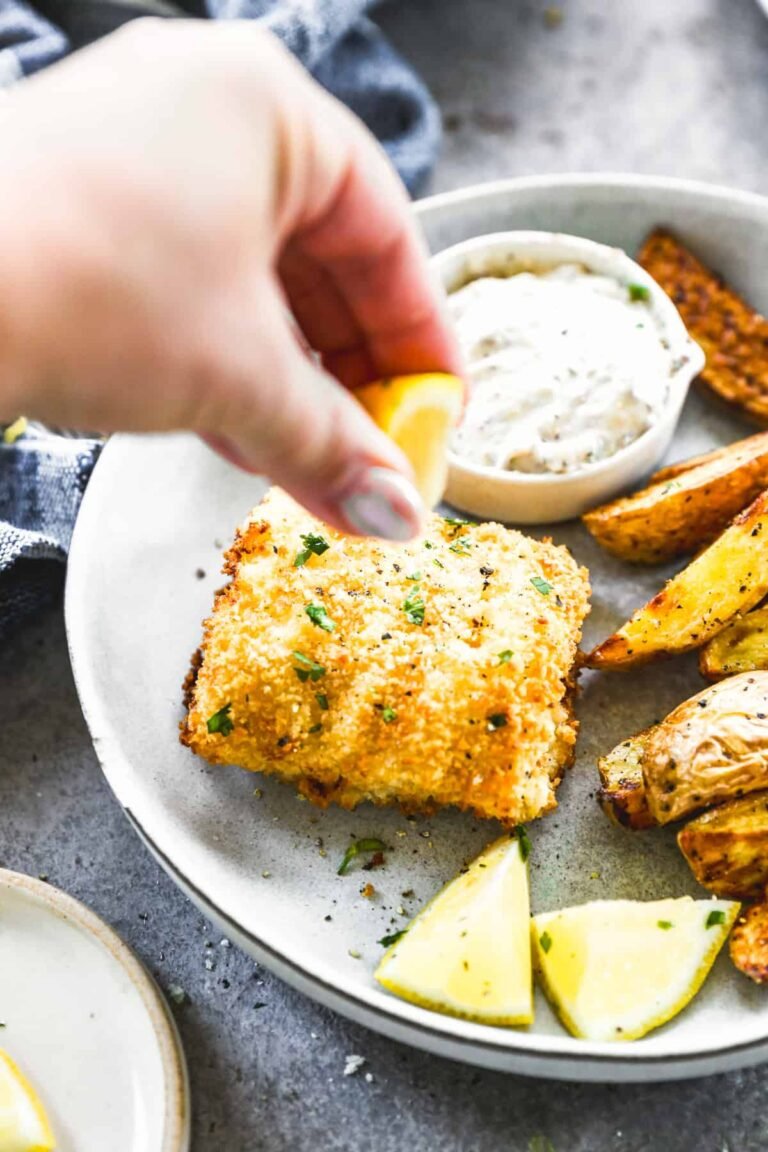
- Fish fillets
- Breaded vegetables
- Tater tots
- Reheated pizza
An air fryer does not fry food in the same way as a deep fryer. It uses little oil, if any. The crisp texture comes from heat, airflow, surface moisture loss, and browning.
Air Fryer vs. Convection Oven: Comparison Table
The table below shows the practical differences between the two appliances.
| Feature | Air fryer | Convection oven |
|---|---|---|
| Basic technology | Small convection chamber | Full-size oven with a fan |
| Cooking space | Small | Medium to large |
| Airflow | Strong and close to the food | Varies by model and rack position |
| Best for | Small portions and crisp foods | Large meals and multiple dishes |
| Preheating | Often short or not needed | Usually takes longer |
| Energy use per small batch | Often lower | May use more energy to heat a large cavity |
| capacity | Limited | Much larger |
| Cleanup | Basket and tray | Racks, trays, and oven interior |
| Cooking flexibility | Focused on quick foods | Baking, roasting, broiling, and more |
| Counter space | Requires permanent or temporary space | Built into the kitchen in most homes |
Which one cooks faster?
An air fryer often cooks small portions faster because the chamber is small and the food sits near the hot airflow. It also loses less heat when you open the basket than a large oven may lose when you open the door.
A convection oven can still cook quickly, especially when it has a strong fan and an air-fry setting. Results depend on:
- The oven’s fan design
- The size of the food
- The amount of food
- The pan or basket used
- Whether the food is frozen or fresh
- How often you open the door
“Faster” is not guaranteed for every recipe. A large convection oven may be more efficient when you cook several trays at once.
Which one makes food crispier?
An air fryer often makes a small batch crispier because air flows around the food from several directions. A perforated basket also allows moisture to escape.
A convection oven can produce similar results when you use:
- A perforated air-fry tray
- A wire rack over a baking sheet
- A single layer of food
- Enough space between pieces
- A properly heated oven
A solid baking sheet can block airflow under the food. This may leave the bottom softer.
Is an Air Fryer Just a Small Convection Oven?
For most practical purposes, an air fryer is a compact, high-airflow convection oven. The terms are not perfect synonyms, though.
The word convection oven covers a broad group of ovens. Some have gentle airflow for baking. Others have strong airflow for roasting. Some use fans only in certain modes.
The word air fryer usually refers to a compact countertop appliance built around fast air circulation. Many air fryers have a basket, a small heating chamber, and controls for time and temperature.
A toaster oven with an air-fry function may work more like a small convection oven than a basket-style air fryer. Its cooking chamber is larger, and its airflow may be less intense. Still, it can air-fry food when paired with the right rack or tray.
What makes an air fryer different?
An air fryer may differ from a regular convection oven in these ways:
- Smaller space: The heat reaches the food quickly.
- Stronger airflow: The fan may move air more directly around the basket.
- Perforated basket: Air can reach the bottom and sides of the food.
- Shorter preheat time: The heating area is small.
- Smaller batch size: Overfilling can reduce crisping.
These features explain why an air fryer can perform better for one or two servings of frozen fries, wings, or vegetables.
Can You Use a Convection Oven Like an Air Fryer?
Yes, you can often use a convection oven like an air fryer, but the results depend on the oven and the pan. A convection setting alone does not always provide the same airflow as a basket-style air fryer.
Use this method for better results:
- Select the convection or air-fry setting.
- Preheat the oven if the manual or recipe calls for it.
- Use a perforated tray or wire rack.
- Place a rimmed baking sheet below the rack to catch crumbs and oil.
- Spread food in one layer.
- Leave space between pieces.
- Turn or shake the food during cooking when needed.
- Check the food before the recipe’s full cooking time ends.
If your oven has a dedicated air-fry mode, follow the manufacturer’s instructions. Some ovens require a special tray or a certain rack position.
How to convert an air-fryer recipe for a convection oven
There is no single conversion rule that works for every recipe. A reasonable starting point is to use the recipe’s temperature and begin checking the food early.
Many home cooks reduce an air-fryer recipe temperature by about 25°F when using a standard convection oven. This is only a starting point, not a guaranteed rule. The correct adjustment depends on the appliance, food size, pan, and recipe.
For example, if an air-fryer recipe says:
- 400°F for 12 minutes
You might try:
- 375°F to 400°F in a convection oven
- A single layer on a perforated tray
- Checking after 8 to 10 minutes
- Turning the food if the top browns faster than the bottom
Use a food thermometer for meat and poultry. Color and crispness do not prove that food has reached a safe internal temperature. The USDA recommends using a thermometer and lists 165°F as the safe minimum internal temperature for poultry. Always follow the current guidance for the food you are preparing.
Can You Use an Air Fryer Recipe in a Convection Oven?
Yes, but you may need to adjust the time, temperature, and pan. An air-fryer recipe assumes a small chamber and strong airflow. A full-size convection oven may take longer to heat the food and may brown the top more quickly than the bottom.
Best practices for converting the recipe
- Use a shallow pan rather than a deep dish.
- Do not crowd the food.
- Use a rack or perforated tray when suitable.
- Start checking early.
- Turn food halfway through cooking.
- Add a small amount of oil only when the recipe needs it.
- Use a thermometer for meat, poultry, and fish.
- Keep the oven door closed as much as possible.
Frozen foods often need less adjustment because package directions may already account for oven cooking. For homemade foods, check texture and internal temperature as the food cooks.
What if the food is not crisp?
If food is pale or soft, one of these problems may be responsible:
- The pieces are too close together.
- The food contains too much surface moisture.
- The pan blocks airflow.
- The oven is not fully heated.
- The batch is too large.
- The food needs to be turned.
- The recipe uses a coating that does not brown well.
Move the food to a higher rack only if the oven manual allows it and the top is not browning too fast. You can also cook a smaller batch or use a perforated tray.
Which Is Better: an Air Fryer or a Convection Oven?
Neither appliance is best for everyone. An air fryer is usually better for small, crisp batches. A convection oven is usually better for large meals, baking, and cooking several foods at once.
Choose an air fryer if you:
- Cook for one to three people
- Often reheat leftovers
- Want quick, crisp results
- Make frozen snacks or vegetables
- Have limited oven access
- Want a small appliance with simple controls
An air fryer may be less useful if you lack counter space or already own a convection toaster oven.
Choose a convection oven if you:
- Cook for a family
- Make casseroles, bread, or large roasts
- Need several racks
- Want one built-in appliance
- Cook large portions often
- Prefer not to store another countertop device
A convection oven may also be the better choice when you need several cooking modes, such as bake, roast, broil, and convection.
Choose a convection oven with an air-fry setting if you want both
Some U.S. ranges, wall ovens, and toaster ovens include an air-fry mode. This can reduce the need for a separate air fryer. However, check the manual before using a third-party basket or tray.
Important details include:
- Approved rack position
- Maximum temperature
- Whether a drip pan is required
- Whether the fan runs continuously
- Whether the tray is dishwasher-safe
- Whether the air-fry mode requires preheating
A built-in air-fry mode may offer more capacity, while a basket air fryer may offer stronger airflow for small batches.
Does an Air Fryer Use Less Energy Than a Convection Oven?
An air fryer may use less energy for a small meal because it heats a much smaller space. A full-size oven may use more energy during preheating and small-batch cooking.
However, the answer changes with portion size. If you cook multiple batches in an air fryer, the total cooking time may become longer. A convection oven can be the better option for a large meal or several trays of food.
Energy use depends on:
- Appliance wattage
- Cooking time
- Preheating time
- Batch size
- Door opening
- Temperature
- How efficiently the appliance transfers heat
A simple comparison is:
Energy used = power in kilowatts × cooking time in hours
For a hypothetical example:
- A 1,500-watt air fryer uses about 1.5 kilowatts while its heating element runs.
- A 3,000-watt oven uses about 3 kilowatts while its heating element runs.
The heating element may cycle on and off, so this calculation is only an estimate. It is useful for understanding why a small appliance can use less energy for a small meal, not for predicting an exact utility cost.
Is Air-Fried Food Healthier Than Oven-Cooked Food?
Air-fried food may contain less added oil than deep-fried food, but the appliance does not automatically make every food healthy. A frozen breaded food still contains the ingredients listed on its package, even when cooked in an air fryer.
Air frying can reduce the oil needed for foods that are normally deep-fried. The nutritional result depends on:
- The food itself
- The amount of oil used
- Portion size
- The coating or breading
- Cooking temperature and time
- Whether the food is homemade or packaged
The same food may have similar nutrition when cooked in an air fryer or convection oven if both methods use the same ingredients and amount of oil.
Do not rely on the words “air fried” as a health claim by themselves. Read the ingredient list and Nutrition Facts label for packaged foods.
Air Fryer and Convection Oven Safety Tips
Both appliances become very hot. Follow the owner’s manual and keep heat-safe clearance around countertop appliances.
Use these safety practices:
- Keep the air fryer on a stable, heat-resistant surface.
- Do not block the air vents.
- Do not overfill the basket.
- Keep paper, towels, and plastic away from heating elements.
- Use oven mitts when handling hot baskets and trays.
- Allow grease to cool before cleaning.
- Clean built-up grease to reduce smoke.
- Use a thermometer for meat and poultry.
- Do not leave cooking appliances unattended when the manual warns against it.
- Check cookware ratings before placing glass, silicone, or other materials in high heat.
Never cover an air-fryer basket with foil if it blocks airflow or can touch the heating element. Some manufacturers allow foil in specific situations, while others do not. The appliance manual controls.
If the appliance produces heavy smoke, turn it off if safe to do so and unplug it. Grease buildup, excess oil, or food touching the heating element may be the cause. If flames occur, keep the door or basket closed, turn off the appliance, unplug it when safe, and call emergency services if the fire does not stop.
Common Mistakes When Using a Convection Oven as an Air Fryer
The most common mistake is treating a full-size oven and a basket air fryer as if they have identical airflow. They do not.
Avoid these errors:
Overcrowding the food
A packed tray traps steam. Steam softens the surface and prevents browning. Use a single layer and cook in batches when needed.
Using a deep pan
A deep pan can block airflow. A shallow tray, wire rack, or approved perforated basket usually works better.
Adding too much oil
Air frying needs little oil. Too much oil can cause smoke and may make breading greasy instead of crisp.
Ignoring the rack position
The top rack may brown food quickly, while a lower rack may cook more slowly. Follow the oven manual and watch the food during the first use.
Following the time without checking
Recipes vary by appliance. Begin checking early, especially when converting a recipe from a small air fryer to a large oven.
Skipping food safety checks
Crisp edges do not prove that meat is safe to eat. Check the thickest part with a reliable food thermometer.
Frequently Asked Questions
Is a convection oven better than an air fryer?
A convection oven is better for large meals, baking, and cooking several dishes. An air fryer is often better for small portions, quick reheating, and crisp foods. The better appliance depends on batch size and cooking habits.
Can I replace my air fryer with a convection oven?
Often, yes. Use the convection or air-fry setting with a suitable tray or rack. You may need to adjust cooking time and temperature because a full-size oven has a larger chamber and different airflow.
Does an air fryer cook the same as a convection oven?
Not exactly. Both circulate hot air, but an air fryer usually has a smaller chamber, stronger airflow near the food, and a perforated basket. Those features can produce faster and crispier results for small portions.
Can I use aluminum foil in an air fryer or convection oven?
Only when the appliance manual permits it. Foil must not block airflow, cover the entire basket, or touch the heating element. Follow the instructions for your specific model.
Do I need to preheat an air fryer?
Some air fryers do not require preheating, while others perform better with it. Follow the recipe and appliance manual. A convection oven generally benefits more from preheating because its cavity is larger.
Key Takeaways
- An air fryer is a compact type of convection cooker.
- A convection oven and an air fryer are similar but not identical.
- Air fryers often crisp small portions faster.
- Convection ovens offer more space and flexibility.
- A convection oven can produce air-fryer-style results with strong airflow, a shallow tray, and uncrowded food.
- Cooking times and temperatures may need adjustment.
- Use a food thermometer for meat and poultry.
- The appliance manual is the final authority for trays, foil, rack position, and safe use.
Conclusion
A convection oven is not exactly the same as an air fryer, but the two appliances use related technology. An air fryer is best understood as a small, focused convection cooker built for fast airflow and crisp results.
Choose an air fryer for quick small batches. Choose a convection oven for large meals and broader cooking tasks. If your oven has a reliable air-fry mode and the right tray, it may perform many of the same jobs without adding another appliance to your kitchen.

2 Comments